Institutions · Confidence · Systems
The Architecture of Confidence
Why Trust Depends on Structures Built Before the Crisis
On 5 January 2024, minutes after departing Portland, Alaska Airlines Flight 1282 lost a fuselage door plug during its climb. The separation caused a rapid depressurisation. Oxygen masks dropped. Personal belongings were pulled from the cabin. One flight attendant and seven passengers sustained minor injuries. The aircraft returned safely to Portland.

Before the day ended, the National Transportation Safety Board had opened an investigation. The following day, the Federal Aviation Administration grounded 171 similarly configured Boeing 737-9 aircraft pending inspection. It later increased its presence at Boeing and Spirit AeroSystems facilities, halted further production expansion and subjected the manufacturer to intensified regulatory scrutiny.
The initial response was rapid, public and institutionally legible.
A serious manufacturing failure had occurred. The response helped prevent it from becoming a broader crisis of confidence in commercial aviation. The institutions surrounding the event acted before most passengers could understand its technical causes. Investigators secured evidence. Regulators restricted movement. Airlines inspected aircraft. Findings entered a formal process through which responsibility could be established and corrective action imposed.
Passengers did not need to examine the maintenance records of every aircraft before boarding. They did not need to understand the engineering of a door plug, the certification process behind it or the regulatory authority governing its inspection.
They relied instead on an architecture they could not fully see.
Confidence is often treated as a consequence of growth. More often, it is one of the conditions that make sustained growth possible.
It does not begin with personal optimism. It begins with the expectation that institutions will remain intelligible, that rules will continue to operate and that failure will activate a credible response.
Under those conditions, confidence becomes a property of the system rather than a characteristic of the individual.
I. Confidence Is Engineered
Confidence is rarely spontaneous. It is produced.
It is produced by courts that enforce contracts, regulators that inspect and sanction, banks that clear payments, property registries that establish ownership, currencies that remain convertible and rules whose application can be reasonably anticipated.
These institutions do more than support economic activity. They create the conditions under which economic actors are willing to commit resources before outcomes are known.
This is confidence infrastructure: the institutional architecture through which predictability, accountability and continuity become embedded expectations rather than individual hopes.
Its most visible component is response.
When a failure occurs, institutions must be capable of identifying it, containing it and assigning responsibility. Their actions must be sufficiently public to be understood, sufficiently independent to be credible and sufficiently authoritative to impose consequences.
But response is only the surface.
Beneath it lies prevention: inspections, reporting obligations, professional standards, maintenance regimes, capital requirements, safety certifications and systems for detecting irregularities before they become crises.
Beneath prevention lies institutional design. The independence of a regulator, the legal authority of an investigative body, the resources available to a court and the accountability imposed on a corporation determine whether formal rules can operate in practice.
A regulator may exist but lack the expertise required to supervise the industry it governs. A court may possess legal authority but remain too slow to protect the economic value of a contract. A property registry may record ownership but fail to defend it against arbitrary reversal.
The institution exists. The confidence infrastructure does not.
Its effectiveness therefore depends less on the presence of individual organisations than on the reliability of the relationships between them.
An investigator must be able to obtain evidence from a manufacturer. A regulator must be able to translate findings into enforceable action. Courts must be capable of reviewing decisions without paralysing them. Firms must know both the standards they are expected to meet and the consequences of failing to meet them.

This coordination does not depend on the reputation of a single official, the discretion of a political leader or the goodwill of the firm being supervised. When it does, confidence remains personal and conditional.
When the architecture operates independently of particular individuals, confidence becomes embedded. It survives changes in leadership, electoral cycles, corporate failures and periods of uncertainty because the rules governing institutional action remain recognisable.
The passenger who boards an aircraft after a highly publicised failure is not necessarily expressing confidence in the manufacturer. She may know almost nothing about the company, the aircraft or the investigation.
She is relying on a structure whose components she will never inspect.
She relies on the regulator's authority, the investigator's independence, the maintenance regime's credibility and the expectation that an aircraft will not return to service until specified conditions have been met.
That confidence was engineered long before she reached the gate.
II. Confidence Becomes Economic
Embedded confidence does more than preserve social order.
It changes the behaviour of capital.
Every long-term investment is an exposure to institutions that cannot be fully controlled by the investor. A factory depends on property rights. A loan depends on enforceable repayment obligations. An infrastructure project depends on regulatory continuity. A foreign investment may depend on currency convertibility, profit repatriation and the ability to transfer or sell ownership under foreseeable conditions.
The longer the investment horizon, the greater the dependence.
An investor can assess current revenues, production costs and market demand. But the future value of the asset also depends on whether contracts will remain enforceable, taxation will remain intelligible, licences will retain meaning and disputes will be resolved through institutions rather than arbitrary power.
Where these conditions appear durable, capital can commit for longer periods.
The uncertainty premium declines. Firms become more willing to fund research, infrastructure and workforce development whose returns may take years to emerge. Banks extend credit against future cash flows. Entrepreneurs create companies whose value depends on the protection of intangible assets. Foreign investors accept that capital will remain exposed because the mechanisms governing ownership and exit are credible.
A strong rule of law provides businesses with a more predictable framework by supporting contract enforcement, property protection and long-term investment. Effective justice systems similarly contribute to business confidence when they resolve disputes fairly and within economically meaningful periods.
Markets price confidence long before economists attempt to measure it.
It appears in required returns, borrowing costs, insurance premiums, liquidity preferences and the length of time for which capital is willing to remain committed.
When confidence infrastructure weakens, these calculations change before the underlying assets necessarily deteriorate.
Investment horizons contract. Required returns rise. Contracts become shorter. Capital concentrates in assets that can be liquidated quickly, transferred abroad or protected through external jurisdictions. Firms delay expansion and preserve cash. Investors may continue to enter the market, but they demand greater compensation for remaining exposed to it.
The economy does not immediately stop.
It becomes more defensive.
This is why institutional deterioration is often difficult to observe in real time. Its earliest effects operate through decisions that leave no visible record.
The investment that never materialises. The contract never signed. The research programme never authorised. The expansion never proposed.
None appears as a discrete loss in quarterly data.
What appears instead is an economy that repeatedly underperforms its visible potential. It may possess capital, talent, infrastructure and geographic advantage, yet remain unable to convert those assets into durable commitments.
Tax incentives can temporarily compensate for high costs. Natural resources can attract capital despite political risk. Strategic geography can make a jurisdiction difficult to avoid.
But none of these can fully substitute for confidence infrastructure.
An incentive can alter the return on an investment. It cannot guarantee that the rules defining that return will remain enforceable. Geography can create importance. It cannot by itself create institutional credibility.
The same port, factory or research programme can therefore hold different economic value in different institutional environments.
Its physical capacity may be identical. Its confidence architecture is not.
III. When the Architecture Fails
Confidence infrastructure becomes most visible when its component institutions fail to restrain one another.
On 29 October 2018 and again on 10 March 2019, two Boeing 737 MAX aircraft crashed, killing 346 people. Investigations subsequently identified failures extending beyond the design of the Maneuvering Characteristics Augmentation System.
The congressional investigation into the aircraft's development and certification described production pressure, a defective safety culture, insufficient regulatory oversight and a certification process in which substantial authority had been delegated to Boeing. The failures were not confined to a single component. They extended across the relationship between manufacturer, regulator, certification system and internal reporting structures.
After the first crash, the aircraft type remained in service while Boeing and regulators largely treated the danger as a technical problem that could be addressed through operational guidance and software modification.
Only after the second crash did a worldwide grounding follow.
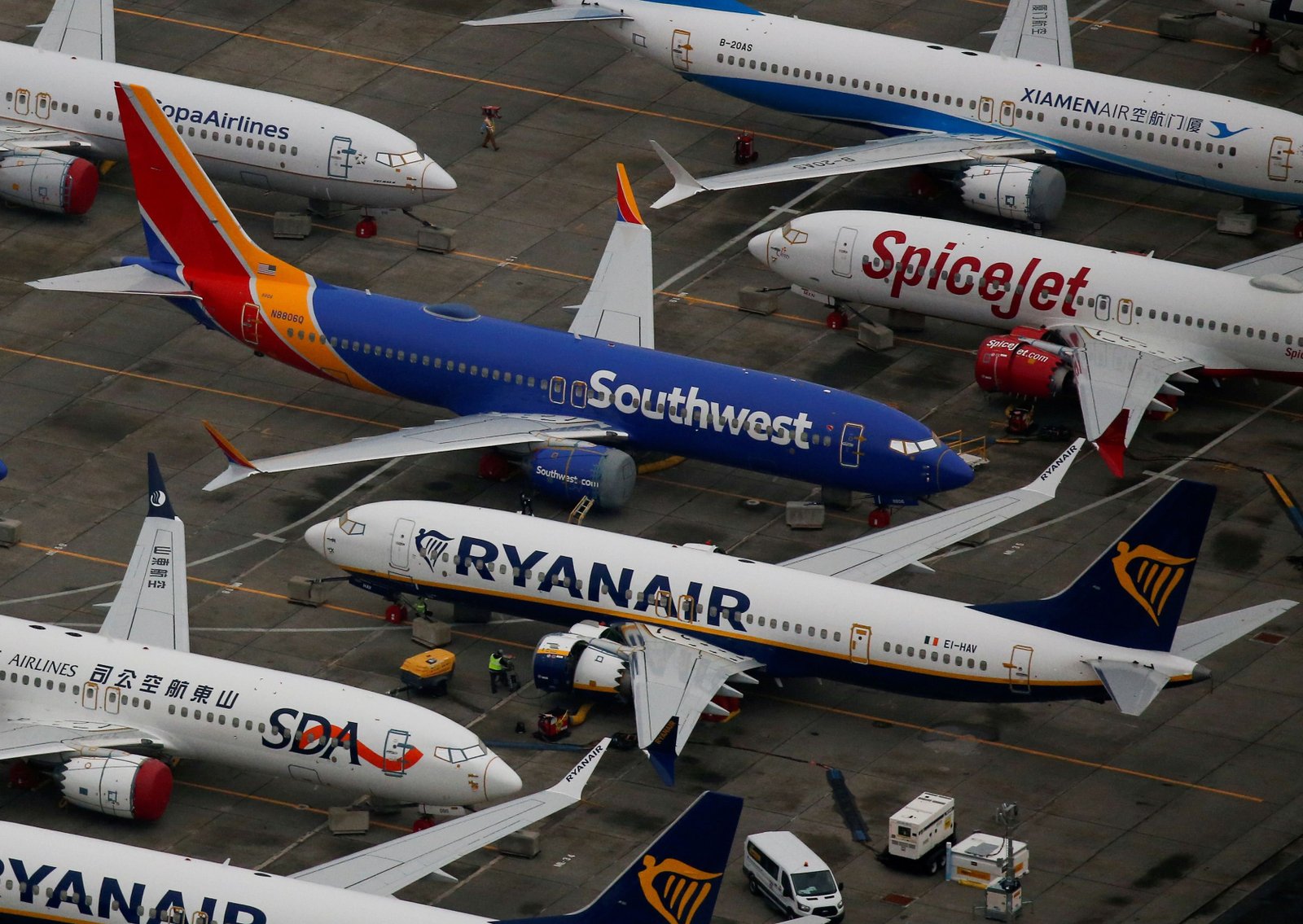
The delay mattered because confidence does not depend only on whether institutions eventually act. It also depends on whether they identify the scale of a failure before another event forces recognition.
A regulator that acts only after other jurisdictions have moved does not provide the same signal as one that reaches an independent and timely judgment. A manufacturer that communicates defensively does not create the same conditions as one that exposes uncertainty and permits scrutiny. An oversight system dependent on the expertise and disclosures of the organisation it supervises may formally exist while becoming progressively less capable of challenging it.
The MAX crisis was therefore not merely a failure of aircraft design. It was a failure in the architecture through which technical knowledge was converted into institutional judgment.
The consequences travelled beyond the aircraft itself. The grounding imposed production disruption, compensation and financing costs, weakened Boeing's commercial position and transmitted uncertainty through a supplier network extending across companies and communities.
Not every economic consequence can be attributed exclusively to a loss of confidence. Production decisions, market conditions and the later pandemic also shaped Boeing's financial performance.
But the crisis demonstrated how quickly a technical failure can become institutional and how institutional weakness can magnify its economic reach.
The comparison with Alaska Airlines Flight 1282 must therefore be made carefully. The human consequences were radically different. The earlier accidents killed 346 people. The 2024 door-plug separation caused eight minor injuries and substantial aircraft damage but no fatalities.
Nor did the 2024 response reveal a perfect system. The NTSB's final investigation identified inadequate training, guidance and oversight at Boeing and weaknesses in the effectiveness of FAA surveillance. The same architecture that contained the immediate failure also exposed the conditions that had allowed it to occur.
That distinction is essential. Confidence does not require institutions that never fail. It requires institutions capable of exposing failure, preserving evidence, assigning responsibility and imposing correction—even when the findings implicate the institutions themselves.
The rapid grounding after Flight 1282 was therefore not proof that the architecture was flawless. It was evidence that important parts of it could still operate: investigation began, movement was restricted, inspections became mandatory and production oversight increased.
The earlier MAX crisis demonstrated the cost of discovering that institutional safeguards had weakened before the event that tested them. The 2024 response demonstrated something more complex: an architecture can retain the capacity to contain a failure while simultaneously revealing how much repair it still requires.
That capacity for public self-correction is not separate from confidence infrastructure. It is one of its deepest components.
Conclusion
The passengers who returned to aircraft after Flight 1282 did not review the airworthiness directives. They did not examine Boeing's production records or study the legal authority of the NTSB. They relied on a system whose workings remained largely invisible to them.
The same is true of capital. Investors rarely inspect every court, regulator, property registry, clearing system or central bank before committing resources. They rely on accumulated evidence that these institutions will continue to operate within an intelligible framework—and that when one part fails, other parts will respond.
Confidence is often described as sentiment: fragile, subjective and difficult to measure. But the confidence that sustains long-term economic activity is not merely a sentiment. It is a structure.
It is built through enforceable contracts, credible supervision, secure ownership, monetary continuity and institutions capable of examining their own failures. It accumulates slowly through repeated performance and can deteriorate long before its decline becomes visible in conventional economic data.
Passengers rarely examine the aircraft before boarding. Investors rarely examine every institution before allocating capital. In both cases, confidence depends on an architecture they cannot fully see.
Failure does not destroy that confidence by itself. Institutions can absorb error, expose weakness and restore the conditions under which people remain willing to move, invest and commit.
What destroys confidence is the discovery that no credible architecture existed to contain the failure.
Confidence cannot be improvised at the moment of crisis. By then, the structure required to preserve it must already be in place.
— Curated Sovereignty
Selected Sources
National Transportation Safety Board
In-Flight Separation of Left Mid Exit Door Plug, Alaska Airlines Flight 1282, Boeing 737-9, N704AL. Aviation Investigation Report AIR-25-04, 2025. · Boeing's Inadequate Training, Guidance and Oversight Led to Alaska Airlines Flight 1282 Door-Plug Separation, 2025.
Federal Aviation Administration
Updates on Boeing 737-9 MAX Aircraft, 2024. · FAA Increasing Oversight of Boeing Production and Manufacturing, 2024.
United States House Committee on Transportation and Infrastructure
The Design, Development and Certification of the Boeing 737 MAX. Final Committee Report, 2020.
OECD
Making Justice Systems More Effective and People Centred, 2025. · Foundations for Growth and Competitiveness: Rule of Law. OECD indicators and policy framework.
World Bank
World Development Report 2002: Building Institutions for Markets, 2002.
Douglass C. North
Institutions, Institutional Change and Economic Performance, 1990.
Author's Note
Questions for Future Research
1. Can confidence infrastructure be measured independently of the economic outcomes it is presumed to produce? — Which indicators could capture the combined performance of courts, regulators, payment systems and property registries?
2. How quickly does embedded confidence deteriorate once institutions weaken, and how rapidly can it be restored after credible reform begins?
3. Is the relationship between confidence infrastructure and economic performance linear, or are there thresholds beyond which limited institutional deterioration produces disproportionate economic consequences?
4. Can digital verification systems strengthen confidence infrastructure without displacing the legal institutions that give their records authority?
5. To what extent can jurisdictions import confidence by relying on foreign courts, currencies, payment systems or arbitration centres rather than building the full architecture domestically?
Concepts Introduced
Confidence Infrastructure — The institutional architecture—courts, regulators, central banks, property registries and the rules governing their interaction—through which predictability, accountability and continuity become embedded expectations rather than individual hopes.
Embedded Confidence — Confidence that operates as a structural property of a system rather than as personal trust in a particular leader, company or government. Embedded confidence can survive individual failures when the architecture required to expose, contain and correct them remains credible.
Curated Sovereignty examines strategic questions whose answers are still emerging.