Economy · Institutions · Systems
The Curated Economy
How States Organise the Conditions Capital Chooses
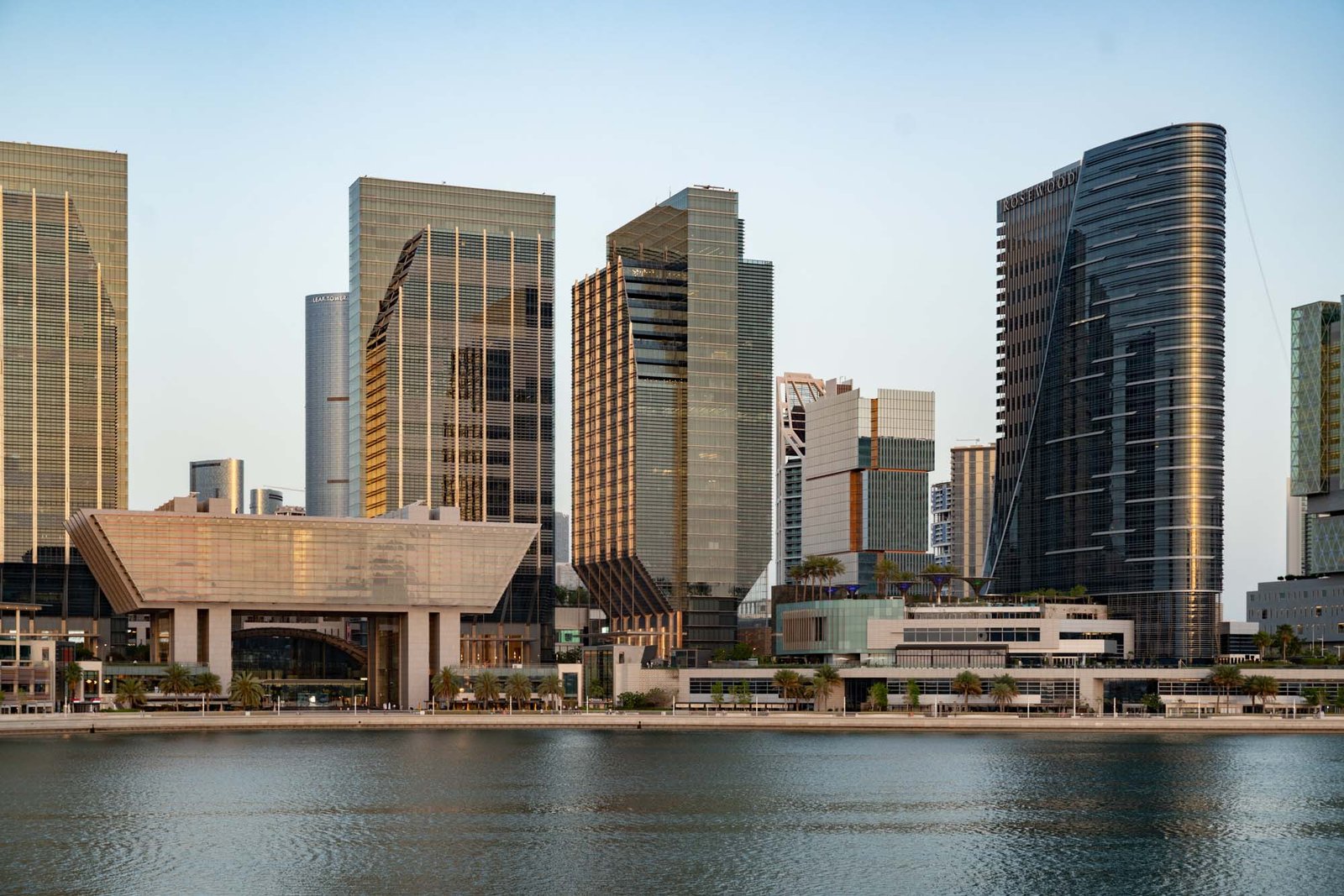
In February 2023, Brevan Howard opened its regional headquarters in Abu Dhabi Global Market. The global macro investment firm leased space for more than one hundred people and began relocating senior executives from across its business. The new hub was designed to include trading, research, risk, operations, technology and compliance functions.
Moving such an operation is not the same as opening a representative office.
It means moving people, systems, risk and decision-making capacity. It requires confidence not merely in the opportunity available today, but in the legal and institutional environment that will surround the firm years from now.
The significance of the decision therefore extended beyond Brevan Howard itself. A jurisdiction with a relatively small domestic market had become sufficiently legible, connected and institutionally familiar to host significant parts of a major investment platform's operating architecture.
Brevan Howard was not merely investing in a location.
It was investing in conditions.
I. The Economy Before the Economy
Before an economy produces goods, it produces conditions.
It produces the court that enforces the contract. The regulator that responds within a defined timeframe. The visa authority that processes the application. The customs system that clears the shipment. The land registry that records the title.
These functions rarely appear in national accounts. Yet they determine whether the economy that follows will be diversified or dependent, trusted or avoided.
Most governments treat them as administrative functions. A smaller number treat them as strategic infrastructure.
The distinction is fundamental.
When an investor chooses between jurisdictions, the decision is shaped by tax rates and market access. But it is also shaped by the number of agencies involved, the consistency of the answers received and the interval between an initial enquiry and a first transaction.
Every additional approval creates delay. Every contradictory interpretation increases uncertainty. Every disconnected institution enlarges the distance between intention and execution.
A curated economy attempts to compress that distance.
It does so not by eliminating regulation, but by aligning legal, financial, administrative and logistical systems so that they behave less like a sequence of separate offices and more like parts of a coherent architecture.
Institutional quality describes whether individual bodies function well.
Institutional choreography describes whether they function together.
A curated economy depends on both. But it increasingly competes through the second.
The investor does not need to understand the internal coordination.
She experiences the result.
II. Capital Chooses Conditions
Capital is often described as mobile, as though it moved freely across borders in search of the highest return.
That image is incomplete.
Capital moves towards conditions. Before it measures opportunity, it measures continuity.
In 2024, Henley & Partners projected that the United Arab Emirates would receive a net inflow of approximately 6,700 millionaires, the highest projected total in the world that year.
Tax policy formed part of the proposition, but not the whole of it. The UAE also offered global connectivity, political stability, long-term residency pathways and financial jurisdictions designed to be legible to international firms and investors.
The movement of wealth was accompanied by a concentration of institutions capable of receiving it.
At the end of 2024, Dubai International Financial Centre housed 6,920 active companies, a 25 per cent increase from the previous year. Abu Dhabi Global Market reported 134 asset and fund managers overseeing 166 funds, while assets under management within the jurisdiction increased by 245 per cent during the year.
These numbers are evidence of institutional concentration.
Legal advisers, regulators, asset managers, family offices, courts, fund administrators and specialised service providers increasingly operate within the same jurisdictional environment. Each new participant raises the usefulness of the architecture for those who arrive next.
The legal systems of DIFC and ADGM are central to that proposition.
Both provide specialised, English-language common-law environments supported by internationally experienced judiciaries and dispute-resolution frameworks familiar to global financial institutions. ADGM directly applies English common law, while the DIFC Courts administer the DIFC's own common-law jurisdiction for civil and commercial disputes.
This does not remove risk.
It makes the language of risk more familiar.
Investors rarely seek the absence of rules. They seek rules whose meaning can be understood, whose application can be anticipated and whose direction does not change arbitrarily.
Regulatory clarity, in this sense, functions as infrastructure.
It lowers the cost of every future transaction by reducing the uncertainty surrounding it.
III. Rules as Infrastructure
Roads, ports and airports are classified as infrastructure.
Rules are classified as policy.
The distinction is eroding.
A well-designed regulatory framework shares many of the defining characteristics of physical infrastructure. It is durable. It reduces the cost of economic activity. Its benefits extend across sectors. Its absence creates bottlenecks that additional capital cannot easily bypass.
The UAE has spent two decades building regulatory architecture alongside physical infrastructure.
The federal framework governing family businesses, enacted through Federal Decree-Law No. 37 of 2022, created clearer mechanisms for ownership, governance and succession within family companies.
The Golden Visa expanded residency from a predominantly administrative status into a more deliberate instrument for attracting and retaining investment, expertise and specialised talent.
The programme offers long-term residence to categories that include investors, entrepreneurs, scientists, specialised professionals and exceptional students.
Its economic significance extends beyond immigration.
A person who expects to remain for several months behaves differently from one who can plan across a decade. Time horizons shape decisions about housing, education, company formation, professional networks and capital allocation.
Residency policy therefore alters more than the number of people present in a jurisdiction.
It alters the depth of their commitment to it.
Regulation, when treated as infrastructure, compounds.
A clearer ownership structure increases the usefulness of the courts. A longer residency horizon increases the value of education, property and business formation. A specialised financial jurisdiction increases the usefulness of the professional services clustered around it.
Each reform does more than solve an isolated problem.
It raises the value of the architecture surrounding it.
IV. Talent as Installed Capacity
Human capital is often described as a consequence of economic growth.
First the economy expands. Then talent arrives.
In curated economies, the relationship can be reversed.
Talent becomes installed capacity.
The logic resembles infrastructure investment. A port is built before all of its future traffic exists. A communications network is installed before every possible user has emerged. Capacity is created in anticipation of the economic activity it may enable.
Talent policy can operate on the same principle.
Researchers, engineers, physicians, investors, designers and entrepreneurs are not valuable only because they fill existing vacancies. Their presence can create organisations, industries, networks and capabilities that the economy does not yet possess.
Most immigration systems remain primarily responsive to established labour demand.
A talent strategy goes further. It attempts to attract capabilities before the market has fully expressed the need for them.
This does not guarantee that new industries will emerge. Human capital cannot compensate indefinitely for weak institutions, limited financing or inadequate infrastructure.
But its presence increases the probability that new firms, specialisations and productive networks can form.
The distinction becomes visible over time.
A jurisdiction that imports labour temporarily can expand output.
A jurisdiction that gives specialised people sufficient stability to build institutions can alter its economic structure.
This is why long-term residency cannot be understood merely as a visa product. It is part of a larger decision about whether foreign expertise will remain external to the country or become embedded within its productive capacity.
In a curated economy, talent is not simply attracted.
It is installed.
V. The Discipline of Continuity
A curated economy is not built through a single reform, investment cycle or announcement.
It is built by maintaining institutional direction across economic cycles, regulatory reforms and leadership transitions.
This is the most difficult condition to sustain.
Many jurisdictions have assembled favourable tax regimes, modern infrastructure and skilled workforces, only to watch their advantages erode when policies contradicted one another, institutions weakened or previously credible commitments were reversed.
Continuity does not require rules to remain unchanged.
It requires change to follow an intelligible direction.
Investors can absorb reform. What they struggle to price is contradiction: the sudden invalidation of assumptions on which earlier decisions were made.
The distinction is important.
An economy that never changes eventually becomes obsolete. An economy that changes without institutional memory becomes impossible to trust.
Continuity lies between those extremes.
The UAE's sovereign rating history offers one external measure of that perception. Fitch first assigned the federal government an AA− rating with a stable outlook in November 2020 and subsequently reaffirmed it, including in 2021 and 2023. In June 2025, S&P Global Ratings assigned the UAE its first federal sovereign rating of AA with a stable outlook.
Credit ratings measure the assessed capacity and willingness of a sovereign to meet its financial obligations. Their relevance here lies in the continuity of external judgement.
Across a period encompassing a global pandemic, volatile energy markets and heightened regional uncertainty, major agencies continued to assess the federal government as a strong investment-grade borrower with a stable outlook. That does not eliminate risk. It suggests that the country's fiscal buffers, external assets and institutional direction remained sufficiently durable to preserve confidence through changing conditions.
In the UAE, long-horizon state capital, specialised financial jurisdictions and durable development strategies reinforce that perception of direction.
They do not eliminate uncertainty.
They reduce uncertainty about how the jurisdiction intends to respond to it.
That perception affects valuation.
Predictability can lower the return investors demand before committing capital. Institutional ambiguity can increase the discount applied to an otherwise attractive asset or market.
This creates what might be called a continuity premium: the additional value attached to jurisdictions that appear capable of preserving access, enforceability and strategic direction over time.
The premium is not produced by messaging alone.
It accumulates through repeated evidence:
a ruling enforced;
a licence renewed;
a reform implemented without invalidating previous commitments;
an obligation honoured when conditions become less favourable.
Confidence becomes durable only when the system survives circumstances in which confidence would have been easy to lose.
VI. From Growth to Curation
The UAE is not the only jurisdiction to compete through coordination.
Singapore, Switzerland and other smaller states have developed different versions of the same strategic proposition: legal predictability, international connectivity and specialised institutions can compensate for limited domestic scale.
What distinguishes the Emirati model is the speed and breadth with which residency, finance, logistics and long-horizon capital have been assembled within a shared economic architecture.
This reflects a structural shift in the sources of competitiveness.
For much of the twentieth century, competitive advantage was analysed principally through production: labour costs, natural resources, industrial capacity, technology and productivity.
Those factors remain essential.
But they do not fully explain why certain small jurisdictions have become disproportionately important nodes within global systems.
Their advantage lies not only in what they produce.
It lies in the conditions they assemble for production, ownership, movement and exchange.
They build courts that make contracts legible.
Regulators that make entry navigable.
Residency systems that lengthen the planning horizon.
Financial centres that connect capital with expertise.
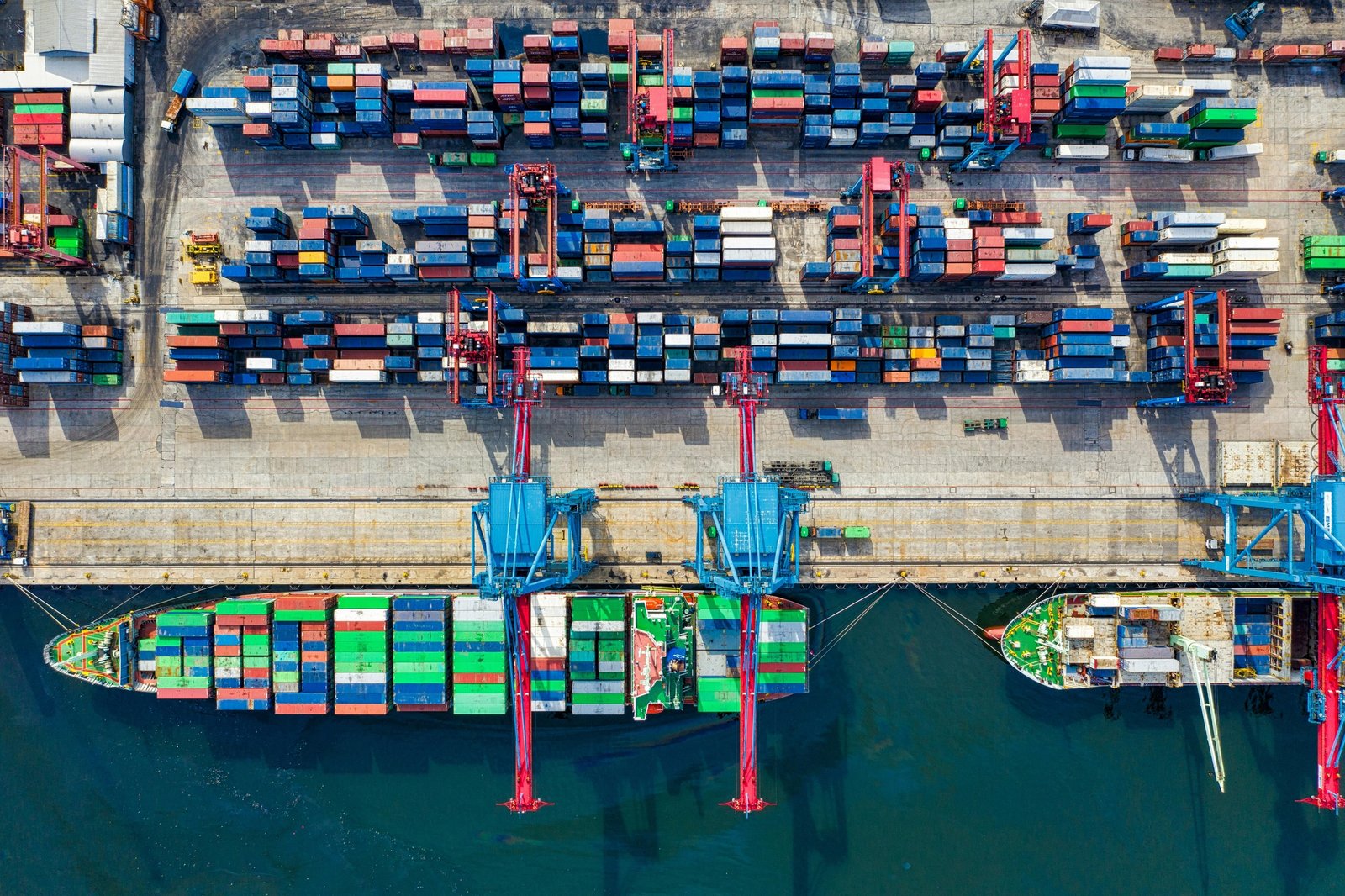
Logistics networks that place distant markets within operational reach.
Individually, each element can be replicated.
The advantage appears in their coordination.
A curated economy is therefore not an economy without friction. No jurisdiction can eliminate delay, regulatory complexity or institutional failure.
Nor is it simply an economy with fewer rules.
It is one in which law, residency, finance, infrastructure and administration are designed to form a coherent experience of the jurisdiction.
The goal is not perfect ease.
It is predictable response.
Economic actors cannot know what the next decade will contain. They can, however, judge whether institutions are likely to respond coherently when conditions change.
That judgement increasingly determines where capital is placed, where talent remains and where organisations are willing to transfer real decision-making authority.
VII. Conclusion
When Brevan Howard moved senior people, trading functions and operational capacity to Abu Dhabi in 2023, it was not making a short-term bet.
The firm entered a legal environment designed to be internationally legible, a financial centre capable of hosting multiple operational functions and a jurisdiction able to accommodate the movement of senior personnel and institutional capacity.
The decision was not evidence that the system contained no friction.
It was evidence that the friction had become sufficiently legible to price.
That may be the deeper product of a curated economy.
Not the promise that every process will be fast.
Not the claim that every decision will be correct.
But the construction of an environment in which people can understand the rules, anticipate institutional responses and commit beyond the immediate transaction.
The most consequential product of such a jurisdiction may not be real estate, finance or aviation.
It may be the deliberate construction of conditions under which other people are willing to build.
Growth is the visible result.
Curation is the architecture beneath it.
— Curated Sovereignty
Selected Sources
Brevan Howard and Abu Dhabi Global Market
Abu Dhabi Global Market. "Brevan Howard Announces Expansion in the Middle East." 2023. Official announcement confirming the opening of the Abu Dhabi office, its role as the headquarters of the firm's regional hub, the space intended for more than one hundred people and the relocation of senior executives. · Abu Dhabi Global Market. "ADGM's Record-Breaking Numbers for First Half of 2023." 2023. Includes Alan Howard's description of ADGM as a transparent and business-friendly environment and an important global hub.
Wealth Migration
Henley & Partners. "The UAE: A Strategic Haven for High-Net-Worth Families." 2024. Presents the projected net inflow of more than 6,700 millionaires to the UAE in 2024. · Henley & Partners. "Henley Private Wealth Migration Report 2024." 2024. Provides the broader methodology and international context for projected private-wealth migration.
Financial-Centre Growth
Dubai International Financial Centre. "Record 20th Anniversary Year Results Solidify DIFC's Position as the Region's Leading Global Financial Centre." 2025. Reports 6,920 active companies at the end of 2024, up 25 per cent from 2023. · Abu Dhabi Global Market. "ADGM's 2024 Performance With 245% Growth in AUMs Highlights Global Influence." 2025. Reports 134 asset and fund managers, 166 funds and a 245 per cent increase in assets under management during 2024.
Legal and Residency Infrastructure
United Arab Emirates Government. "Federal Decree by Law No. 37 of 2022 Concerning Family Businesses." 2022. Federal legal framework governing family businesses, including ownership, governance and succession provisions. · United Arab Emirates Government. "Golden Visa." Official description of the long-term residence programme and its eligible categories.
Sovereign Ratings and Continuity
Fitch Ratings. "Fitch Rates the United Arab Emirates at 'AA−'; Outlook Stable." 2020. The initial federal sovereign rating. · Fitch Ratings. "Fitch Affirms the United Arab Emirates at 'AA−'; Outlook Stable." 2023, 2024, 2026. Continued affirmations. · S&P Global Ratings. "United Arab Emirates Assigned 'AA' Foreign and Local Currency Ratings; Outlook Stable." 2025. S&P's first federal sovereign rating for the UAE. · S&P Global Ratings. "United Arab Emirates Ratings Affirmed at 'AA/A-1+'; Outlook Stable." 2026. Confirms the rating and stable outlook in March 2026.
Author's Note
Questions for Future Research
1. Can institutional choreography be measured? — Could a comparative indicator assess the degree of coordination among courts, regulators, residency authorities, financial institutions and administrative bodies?
2. How much economic value does predictable execution create? — Can the interval between a decision and its lawful execution be linked to investment volumes, company survival, transaction costs or capital formation?
3. Can a continuity premium be isolated empirically? — Could differences in sovereign spreads, required returns, asset valuations or foreign-investment duration reveal the value assigned to institutional continuity?
4. When does curation become over-centralisation? — Does strong institutional coordination eventually reduce experimentation, distribute errors across the whole system or make economic activity excessively dependent on state direction?
5. How durable is installed talent? — What determines whether long-term residents become institution-builders rather than temporary beneficiaries of favourable conditions?
6. Can curated economies remain coherent during external shocks? — How do geopolitical disruption, financial stress, energy-market volatility or sudden population growth affect the coordination on which the model depends?
7. Which elements can other jurisdictions reproduce? — Can legal legibility, residency policy and administrative coordination be transferred independently, or does their value depend on the entire surrounding architecture?
8. Who bears the cost of institutional coherence? — Does a system optimised for mobile capital and specialised talent create hidden costs for smaller firms, lower-income residents or actors outside privileged financial zones?
Concepts Introduced
The Curated Economy — A jurisdiction in which law, residency, finance, administration and infrastructure are deliberately organised to create a coherent environment for economic activity. The curated economy is not defined by the absence of regulation or friction. Its advantage lies in making institutional processes intelligible, coordinated and sufficiently predictable for long-term commitments.
Institutional Choreography — The capacity of separate institutions to operate as parts of a coherent system. Institutional quality asks whether an individual court, regulator or administrative body performs well. Institutional choreography asks whether their decisions, procedures and timelines reinforce rather than contradict one another.
Architectures of Permission — The legal and administrative structures through which economic actors obtain the right to enter, establish, own, employ, transfer and operate. They determine how much distance separates economic intention from lawful execution.
Talent as Installed Capacity — The treatment of specialised human capital as productive infrastructure established in advance of fully expressed demand. Rather than admitting people only to fill existing vacancies, a talent strategy creates the possibility that new firms, capabilities and industries can emerge around them.
Continuity Premium — The additional value attached to jurisdictions perceived as capable of preserving access, enforceability and intelligible institutional direction over time. The continuity premium does not imply that rules never change. It arises when change occurs without arbitrarily invalidating the assumptions on which earlier decisions were made.
Legible Friction — Constraint that remains present but can be understood, anticipated and incorporated into a decision. Legible friction differs from effortless administration. Its value lies not in eliminating every delay or requirement, but in making their nature, sequence and probable consequences sufficiently clear to price.
Curated Sovereignty examines strategic questions whose answers are still emerging.