Architecture · Institutions · Influence
The Geometry of Influence
Why Power Is Often Organised Through Space
Before the inaugural galleries of Louvre Abu Dhabi could be assembled, France's museums had to decide what they were prepared to let go.
Each work carried the trace of another institution: a gallery that would be left empty, an exhibition already promised, a confidence extended only for a time. Some museums entrusted masterpieces. Others released what their own walls could spare.
By then, the museum's ambition had already been fixed in stone.
The dome promised universality. Beneath it, that promise still depended on agreements and on the willingness of established institutions to let part of their authority travel.
France had extended the Louvre's name. Abu Dhabi had built the setting in which it would acquire another meaning.
Visitors would eventually encounter a collection arranged across civilisations.
Before it could appear seamless, its boundaries had been negotiated.
The dome was the museum's most visible geometry.
It was not the one that determined what could enter beneath it.
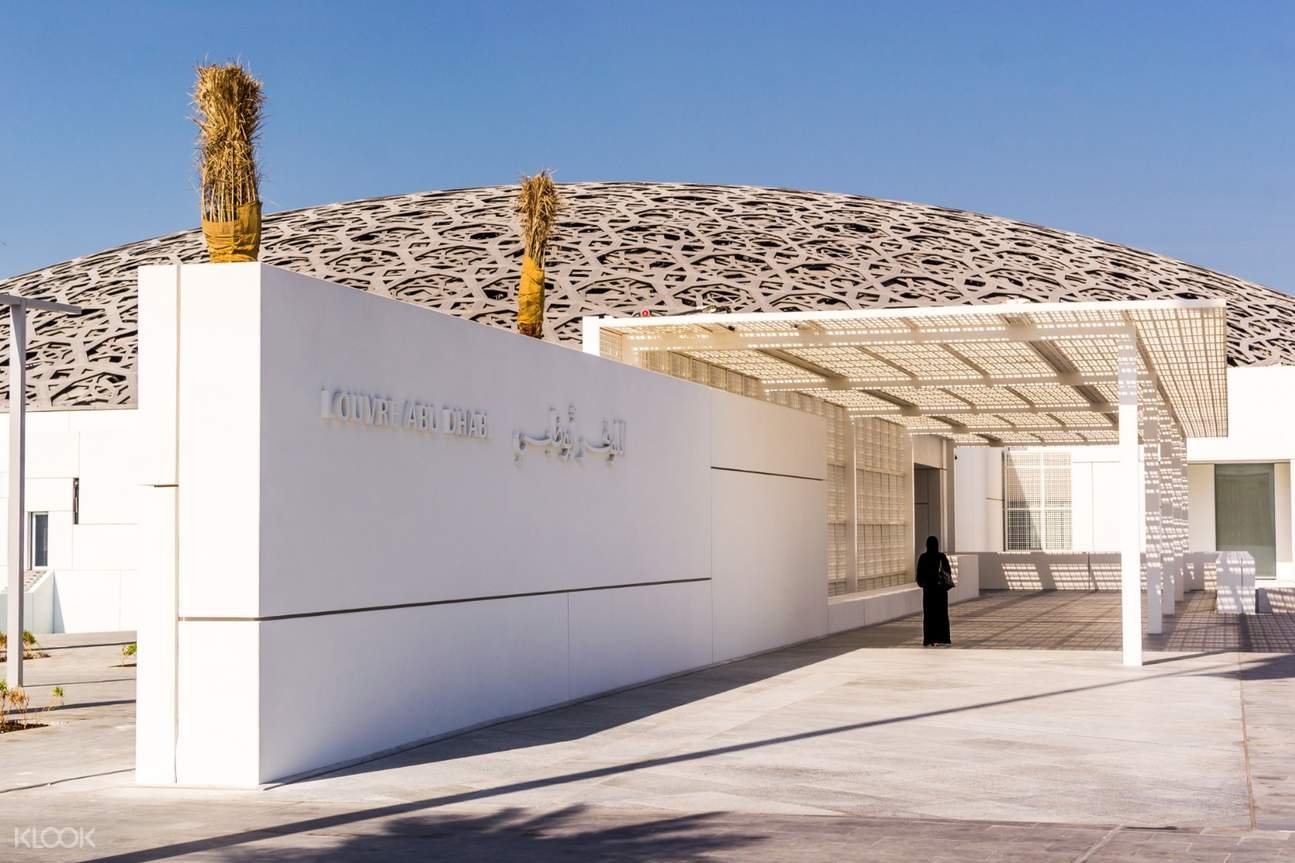
I. The Building Before the Message
Louvre Abu Dhabi began with an agreement between two governments.
Signed in 2007, the framework extended far beyond the construction of a museum. It provided for the use of the Louvre name, loans from French national collections, temporary exhibitions, curatorial expertise, conservation support and professional training. The name was granted for thirty years and six months. Loans from French institutions would continue for ten years on a declining basis as the museum developed a collection of its own.
The building on Saadiyat Island gave that arrangement a physical address.
It did not merely receive art. It entered an established system of cultural recognition.
A museum opening beneath the Louvre name does not begin from institutional anonymity. Before the first visitor encounters the collection, the name has already placed the institution within a history of authority, expertise and public expectation accumulated elsewhere.
The architecture intensifies that recognition. The dome, the waterfront and the scale of the complex communicate permanence before the institution has had time to demonstrate it. They allow an emerging museum to appear not as a temporary initiative, but as a structure intended to endure.
Yet the arrangement was more complex than the relocation of French cultural authority into an Emirati building.
Abu Dhabi was not creating a branch of the Louvre. It was using temporary access to an established system of recognition to accelerate the construction of authority of its own. The French museums supplied works, knowledge and institutional association. The emirate supplied capital, political continuity and the strategic horizon within which those resources could be assembled.
The building did not announce this convergence.
It gave it a durable location.
This is the first operation of institutional geometry. Separate systems—cultural, diplomatic, educational and financial—are brought into relation within a structure capable of making their coexistence appear natural.
The museum's public message came later.
The conditions under which that message could be believed had already been built.
II. Proximity Is Not Neutral
Institutions rarely acquire influence in isolation.
They acquire it through relationships: with governments, collections, universities, professional communities, audiences and other institutions whose recognition alters how they are perceived.
Distance raises the cost of those relationships. It increases the time, coordination and intention required for encounters to occur. Proximity does not eliminate those costs, but it can lower them.
Louvre Abu Dhabi was therefore not placed on Saadiyat Island as an isolated monument. It became an anchor within a district intended to concentrate museums, educational initiatives, cultural programmes, hospitality and spaces of public representation. The official vision for Saadiyat Cultural District places institutions addressing national history, world culture, natural history and contemporary creativity within the same geographic field.
The significance of that concentration lies less in the individual buildings than in the distances between them.
An institution placed alone must continually create the context in which it matters. An institution placed within a recognised district inherits part of that context from its surroundings. Visitors arrive with broader expectations. Events can draw upon neighbouring institutions. Cultural programming acquires continuity beyond the calendar of a single museum.
The district does not guarantee cooperation.
It lowers the distance across which cooperation must travel.
This distinction matters. Proximity is often described as if it automatically produced exchange, innovation or legitimacy. It does not. Institutions can occupy adjacent buildings while remaining professionally and intellectually separate.
But physical concentration alters the cost of encounter.
A delegation visiting one institution can reach another without reorganising an itinerary. A university can form programmes around several collections rather than one. A cultural event can draw its symbolic weight from the district as a whole. Audiences, reputations and institutional functions begin to overlap.
The result is not predetermined coordination.
It is a field in which coordination becomes easier to sustain.
Space cannot command an outcome. It can determine how much distance must be crossed before the outcome becomes possible.
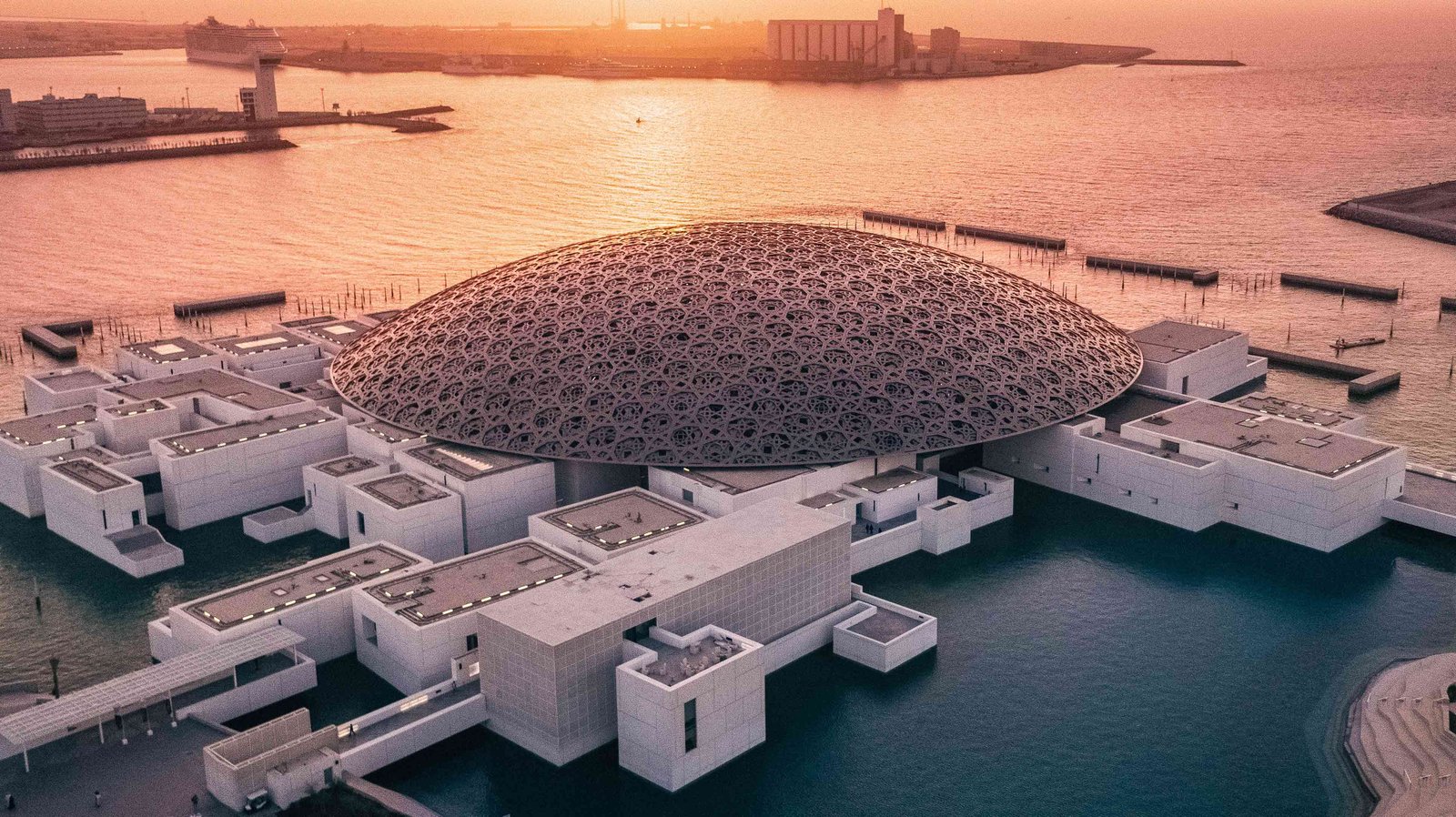
III. The Institutional Coordinate
A strategically positioned building does more than occupy a site.
It provides a reference around which other actors can plan.
Louvre Abu Dhabi participates simultaneously in several systems. It is a museum with its own developing collection. It receives loans from French and international institutions. It embodies a diplomatic agreement. It draws visitors to Abu Dhabi. It supports education and professional training. It forms part of a larger strategy through which culture contributes to the emirate's international position.
These functions do not operate independently.
The quality of the collection affects the museum's reputation. Reputation shapes attendance and partnership opportunities. Institutional partnerships affect exhibitions and research. The credibility of the museum influences the perceived viability of the district around it.
The building does not direct each of these systems.
It allows them to orient themselves around a location expected to remain.
Buildings are not simply destinations. They are institutional coordinates.
A coordinate does not generate the movement that passes through it. Its value lies in stability. Once fixed, it allows other actors to locate themselves in relation to it.
Transport connections can be extended because a destination is expected to endure. Educational programmes can be designed around collections that will remain accessible. Hospitality and public infrastructure can be positioned around predictable flows of visitors. International partners can invest in relationships that no longer depend upon a temporary event.
The influence of the building therefore emerges partly through anticipation.
Actors adjust their decisions not only to what the museum is, but to the expectation that it will continue to matter.
This is where architecture acquires strategic force. Permanence changes behaviour before the full consequences of that permanence are known. Once enough institutions orient themselves around the same coordinate, withdrawal becomes more costly. Programmes, routes, investments and reputations begin to depend upon the continuity of the place.
The structure does not need to seek influence over each participant.
Influence accumulates as participants organise themselves around the assumption that the structure will remain.
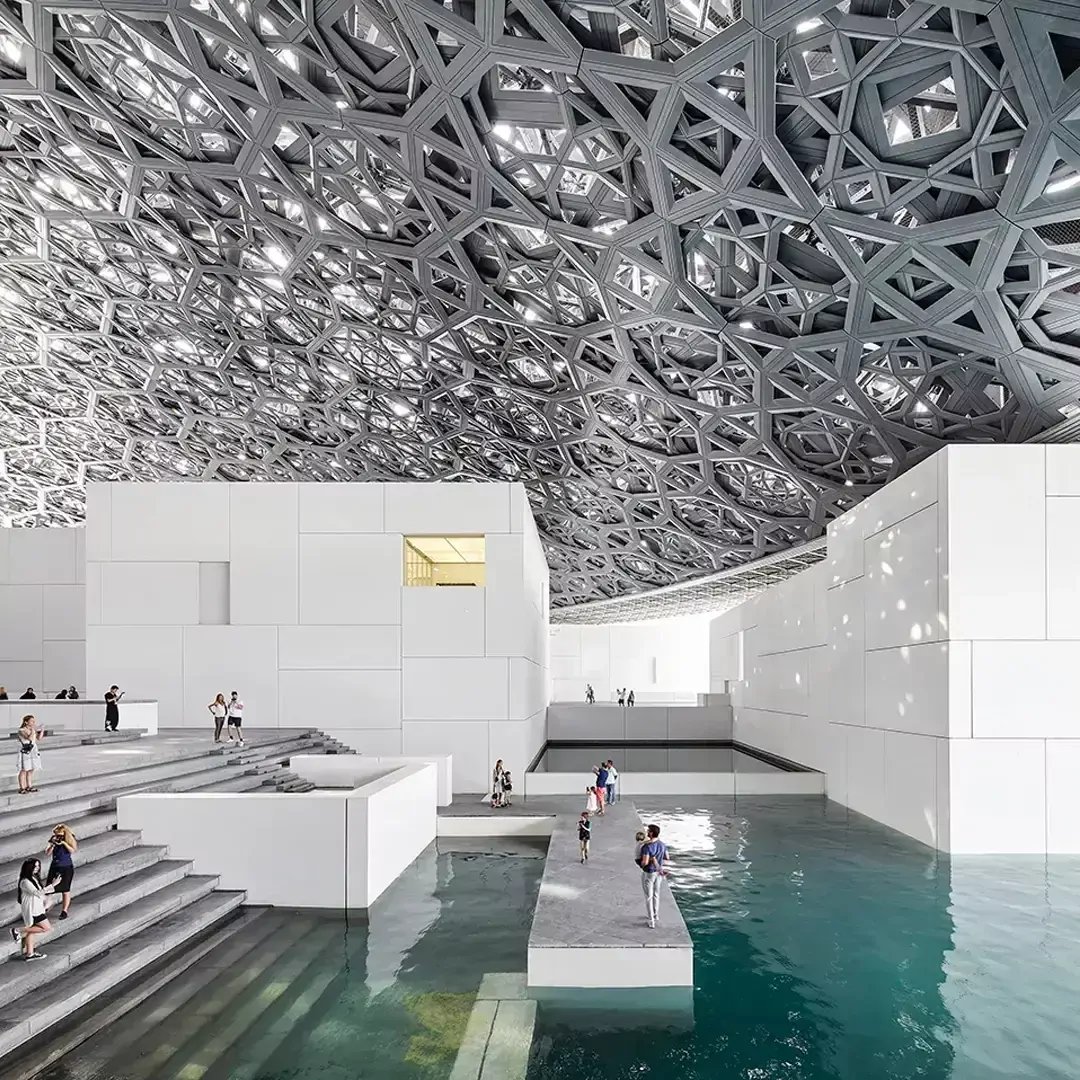
IV. Geometry as Orientation
The institutional geometry surrounding Louvre Abu Dhabi has a physical counterpart.
Jean Nouvel's architecture does not reveal the museum in a single view. The complex is approached through a sequence of low buildings, passages, water and filtered light. Above them, the dome is formed from superimposed geometric layers that admit the sun without exposing the interior fully to it. The design draws upon the conditions of the Saadiyat site—between sea and land, brightness and shade.
The experience is constructed through transitions.
Enclosure gives way to openness. A narrow passage reaches the water. The controlled light of the gallery opens beneath the scale of the dome. The visitor encounters the museum not as a single object, but as a succession of spatial decisions.
Architecture does not need to tell the visitor what to think. It structures the order in which meaning becomes available.
That order matters because perception is rarely neutral. What appears first establishes a frame for what follows. A threshold separates the ordinary environment from the institutional one. Scale alters the degree of attention a place appears to deserve. Movement determines whether an object is encountered in isolation or in relation to what came before it.
The museum's curatorial structure performs a comparable operation. Its galleries seek to place objects from different cultures and periods into shared narratives rather than organising them exclusively by national or civilisational boundaries. Louvre Abu Dhabi describes the permanent galleries as a history of humanity presented through thematic connections across time and geography.
The architecture does not prove that universality exists. It makes universality spatially plausible.
Visitors move beneath a single dome while encountering objects produced by societies that never occupied a single political or cultural system. The building creates continuity where history contains division. The collection then gives that continuity intellectual form.
Its symbolic power begins in a physical act of orientation. The dome establishes where the visitor is. The galleries determine how difference will be encountered. The sequence remains legible even when the mechanism producing it does not.
Geometry becomes influential not because it imposes an interpretation, but because it establishes the field within which interpretation begins.
V. When Space Becomes Strategy
States do not build only to possess buildings.
They build to establish functions, attract institutions, reduce the distance between networks and create locations around which recognition can accumulate.
Architecture becomes strategic when it changes more than the appearance of a place. It must alter the relationships that the place can support.
A financial district that brings regulators, courts, banks and professional services into the same jurisdiction reduces the institutional distance between capital and the rules governing it. A diplomatic quarter concentrates representation and protocol within a legible geography. A cultural district brings museums, educational institutions, public events and international partners into repeated proximity.
In each case, the physical arrangement does some of the work that formal coordination alone cannot easily achieve.
It does not require every participant to share the same purpose. It creates a setting in which separate purposes can interact without first being reconciled.
This is Institutional Geometry: the spatial arrangement through which institutions, actors and forms of legitimacy are brought into relation, altering the conditions of access, recognition and influence.
But geometry alone is insufficient.
A celebrated building cannot manufacture the authority it was designed to signify. A district can concentrate institutions while failing to create meaningful exchange between them. A prestigious name can accelerate recognition without guaranteeing the independence, judgment or continuity required to sustain it.
Institutional geometry can reduce distance. It cannot manufacture trust.
Trust depends upon performance repeated over time: exhibitions that justify attention, collections built with intellectual coherence, partnerships capable of surviving disagreement and institutions strong enough to continue after the original political moment has passed.
Without that substance, proximity becomes adjacency. The district remains a master plan. The museum becomes a monument to an ambition that never acquired institutional life.
The distinction is essential because architecture can conceal weakness as effectively as it reveals strength. A structure may project permanence before the systems beneath it have become durable. It may attract attention faster than the institution can acquire authority.
The true measure of institutional geometry is therefore not whether a building gathers actors at its opening. It is whether the relationships assembled around it remain productive after the spectacle of construction has ended.
Louvre Abu Dhabi's long-term significance will not be determined by the dome alone, nor indefinitely by the name it carries. It will depend upon whether the museum can convert borrowed recognition into authority of its own—through its collection, its scholarship, its institutional judgment and the continuity of the relationships it was built to hold.
Space can make influence possible. Only institutions can make it last.
Conclusion
The museum on Saadiyat Island did not acquire influence simply through its dome, its name or the works displayed beneath it.
Its influence emerged from the relationships gathered within the same structure: a French cultural system, an Emirati state, an international network of museums, a developing collection, a new cultural district and a global audience.
Architecture made that proximity visible. Its deeper function was to make it durable.
But buildings cannot replace the institutions they are designed to contain. They can reduce distance without creating trust. They can gather authority without ensuring that authority will be transferred. Their strategic value begins only when the relationships assembled around them become capable of surviving the moment of construction.
Before Louvre Abu Dhabi could present a continuous history of civilisation, separate institutions had to decide what they would release, what they would retain and how much confidence they were prepared to extend.
The visitor would see the result. The negotiation would remain outside the frame.
Influence often appears to begin with a message—a speech, a declaration, a published strategy or a celebrated opening. It may begin earlier—with the geometry of the room in which the relationship becomes possible.
— Curated Sovereignty
Selected Sources
Louvre Abu Dhabi
Our Story — Official account of the museum's institutional history, collection protocols and the 2007 intergovernmental framework. · Our Partners — The official history of the partnership between Abu Dhabi and France and the opening of the museum on Saadiyat Island in 2017. · Museum Galleries — Telling the Story of Humanity in Twelve Chapters — Presentation of the permanent galleries, the museum's collection and works loaned by French institutions.
Musée du Louvre
The Louvre Abu Dhabi — Official overview of the museum's collection, loans from French partner institutions and Jean Nouvel's architectural approach. · Louvre Abu Dhabi to Welcome Visitors from November — 2017 — Details of the 2007 agreement, including the use of the Louvre name, institutional loans and temporary exhibitions.
France Muséums
Louvre Abu Dhabi — Overview of France Muséums' role in supporting the creation and development of the museum. · Conservation and Exhibition of a Universal Collection — Account of the collection-management, documentation and installation work undertaken before the museum opened. · Designing the Narrative for a Twenty-First-Century Museum — Description of France Muséums' continuing role in exhibitions and loans from French national collections.
Saadiyat Cultural District
Cultural District — Official presentation of the museums, cultural institutions and initiatives concentrated on Saadiyat Island.
Author's Note
Concept Introduced
Institutional Geometry — The spatial arrangement through which institutions, actors and forms of legitimacy are brought into relation, altering the conditions of access, recognition and influence. Institutional geometry does not determine outcomes. It reduces distance, establishes durable coordinates and structures the field within which interaction becomes more or less possible.
Questions for Future Research
1. Can institutional geometry be measured through the cost, frequency and durability of interaction between institutions?
2. Under what conditions does physical proximity produce genuine cooperation rather than mere institutional adjacency?
3. How does a new institution convert borrowed recognition into independent authority?
4. Can institutional geometry concentrate power so narrowly that it excludes legitimate actors or creates dependencies that become difficult to reverse?
5. Do digital platforms create forms of institutional geometry comparable to those produced by physical districts, jurisdictions and buildings?
Curated Sovereignty examines strategic questions whose answers are still emerging.