Standards · Infrastructure · Systems
The Normative Architecture
How Rules Become Infrastructure
On the evening of 2 January 2024, Japan Airlines Flight 516 collided with a Japan Coast Guard aircraft on the runway at Tokyo's Haneda Airport.
Flames spread along the left side of the Airbus A350, and smoke began to enter the cabin. Through the windows, passengers could see the fire gathering outside, but they had no way of knowing which exits remained usable or how long the aircraft would withstand the heat.
The cabin crew began issuing instructions.
No passenger opened a door.
They waited not from hesitation, but because the wrong decision could turn an exit into an entry point for fire. In those first minutes, survival depended on someone else knowing what could still be opened, what had to remain closed and how much time the aircraft might still provide.
Passengers left their belongings behind and moved toward the exits selected by the crew. One by one, they descended the evacuation slides while the fire continued to consume the aircraft behind them.
All 379 people aboard survived.
In the days that followed, the evacuation was described as extraordinary. The discipline of the passengers was praised. So were the composure of the crew and the rigour of their training.
Each explanation was true.
None was complete.
The passengers had never studied the aircraft's certification history. They knew nothing of the requirements governing its exits, the materials inside its cabin or the procedures rehearsed long before the collision. Yet all of those decisions were already present in the few choices available to them that evening.
They were present in the doors that opened, in those that remained closed and in the instructions the crew knew to give.
The most important part of the evacuation had happened years before anyone saw the fire.

A rule becomes infrastructure when the world has been built around it.
Power is usually measured through visible capacities: the ability to command force, control capital, secure territory or dominate production.
But some of the most durable forms of influence operate earlier, before the aircraft is manufactured, the port is constructed or the network is deployed.
They begin with the authority to determine what will be recognised, what will be compatible and what will be permitted to connect.
A standard may appear to be little more than a technical document. Yet once markets, institutions and physical systems organise themselves around it, the document acquires consequences far beyond its language.
It begins to shape participation itself.
This is the normative architecture: the standards, protocols, certifications and recognition mechanisms through which otherwise separate systems become capable of operating together.
It rarely commands directly.
It defines the conditions under which movement becomes possible.
I. When a Rule Becomes a System
An aircraft cannot enter international commercial service simply because it can fly.
Its design must satisfy an accepted airworthiness framework. Its certification must be understood beyond the jurisdiction in which it was issued. Its maintenance, operation and crew procedures must remain legible to authorities in every market it enters.
A certificate produced in one country must carry meaning in another.
A crew trained on one continent must be able to operate an aircraft designed and manufactured elsewhere.
Airports, regulators, airlines and manufacturers must act as parts of a system even though no single institution governs them all.
Commercial aviation depends on thousands of independent decisions being treated as compatible.
That compatibility is not spontaneous.
The International Civil Aviation Organization establishes Standards and Recommended Practices that provide a common basis for international civil aviation. National and regional authorities translate those principles into detailed certification codes, operating requirements and oversight systems.
ICAO does not design individual aircraft. Nor does it replace the authorities that certify them. Its role is more foundational: to create a shared framework through which national systems can recognise one another without becoming identical.
The result is neither a single global regulator nor a collection of entirely separate national regimes.
It is a layered architecture.
Within the European certification framework, for example, a large passenger aircraft must demonstrate that its maximum seating capacity can be evacuated within ninety seconds under prescribed test conditions, with only half of the available emergency exits used.
The demonstration is artificial.
Its design consequences are real.
An evacuation requirement reaches backwards into the aircraft long before passengers ever board it. It influences the number and dimensions of exits, the width of passageways, emergency lighting, floor-level guidance, slide deployment and the arrangement of the cabin.
Engineers design around the requirement. Manufacturers must demonstrate compliance. Authorities examine the evidence. Airlines develop compatible procedures. Cabin crews rehearse how to act when the assumptions of normal flight disappear.
No single rule explains what happened at Haneda.
The outcome emerged from their alignment.
The airframe provided time. The cabin configuration preserved routes of movement. The crew evaluated which exits could be used without directing passengers toward fire.
Each capacity had been established before the emergency.
This is how normative architecture operates. It converts decisions taken in advance into options available under pressure.
Its authority is distributed rather than concentrated.
A manufacturer cannot place an aircraft into commercial service merely because the aircraft performs well. It must be legible to a recognised system of certification.
An airline cannot operate the aircraft merely because it owns it. Its maintenance programme, training system and operating procedures must also satisfy accepted requirements.
The aircraft, the operator, the crew and the regulator become layers of the same structure.
No passenger aboard Flight 516 had studied that structure.
They experienced only its consequences.
II. When the World Is Built Around the Rule
A freight container unloaded from a vessel in Singapore can later be lifted by a crane in Rotterdam, carried by rail across Germany and transferred to a truck without its dimensions being renegotiated at each stage.
The journey appears routine.
Its ordinariness is the achievement.
Before containerisation, cargo moved through ports as individual pieces. Goods were unloaded, counted, stored and loaded again by hand. Every transfer created delay, damage, uncertainty and cost.
The container changed this not merely because it enclosed cargo, but because ships, ports and transport systems gradually accepted the same physical language.
Its dimensions were standardised. So were its corner fittings, load ratings and structural interfaces.
The box became predictable.
Everything around it could therefore become specialised.
Ports installed cranes designed to lift it. Ships were built around standardised cells. Railcars and road vehicles adapted to its dimensions. Warehouses, customs procedures and logistics systems were redesigned to receive it.
The standard did not simply improve an existing process.
It reorganised the physical environment through which trade occurred.

A container that conformed could move from one system to another without being transformed. An incompatible unit remained possible, but the infrastructure surrounding it no longer had reason to adapt.
This distinction matters.
The standard did not prohibit alternatives.
It made them increasingly expensive.
A port built around standard container dimensions cannot efficiently accommodate a radically different unit. A vessel designed around established cell sizes loses capacity if required to carry incompatible equipment. Logistics companies that have invested in cranes, chassis, tracking systems and loading procedures have little incentive to reconstruct them around another format.
The more extensively the system is adopted, the less voluntary it becomes in practice.
This is normative entrenchment: the process through which a standard becomes resistant to displacement because infrastructure, capital, contracts and institutional routines have been built around it.
Its strength does not arise from legal compulsion alone.
It arises from accumulated dependence.
Every new terminal, vessel, warehouse and transport contract adds weight to the existing choice. Over time, the standard acquires a material constituency: assets whose value depends on its continuation.
An alternative may be technically superior. That is no longer sufficient.
It must also overcome the cost of rebuilding the world around it.
Containerisation sharply reduced the friction of transporting goods across long distances. It made repeated transfers faster and more predictable, helping fragmented supply chains become economically viable.
Components could move between factories, ports and markets before reaching a final consumer. Production no longer needed to remain close to the place of consumption.
None of those consequences was contained in the dimensions of the box.
They emerged because the economic system reorganised itself around them.
The specification had ceased to describe an object.
It had begun to organise movement.
III. Who Writes the Default
Long before a mobile device reaches the market, many of the technical conditions under which it will operate have already been negotiated.
Manufacturers compete to build networks, chipsets and handsets.
They also compete to shape the specifications those products will eventually have to satisfy.
The development of fifth-generation telecommunications made this competition visible.
The technical specifications underlying 5G were produced through the 3rd Generation Partnership Project, which brings together standards organisations, telecommunications companies, equipment manufacturers, software developers and other participants from across the industry.
The work is highly technical. Its consequences are strategic.
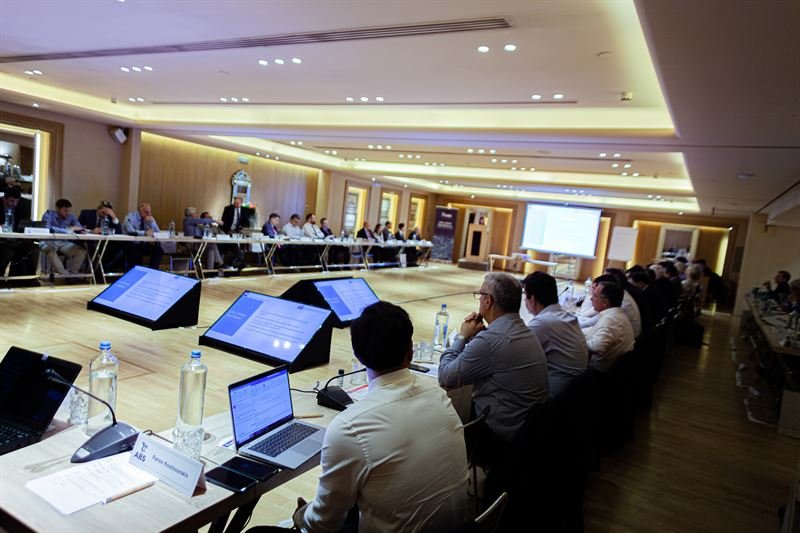
Decisions about radio interfaces, network architecture and service capabilities influence which technologies will become interoperable, which patents may become essential and which suppliers will be well positioned as deployment expands.
Once a technical contribution is incorporated into an accepted standard, it can acquire a reach that no single product could achieve on its own.
A manufacturer implementing the standard may need access to the patented technologies required to make compliance possible. Intellectual property can therefore move from being one proprietary solution among many to becoming part of the architecture through which an entire market operates.
The contest is no longer confined to producing the best device.
It extends to shaping the environment in which every device must function.
Participation in standard-setting is formally open. Meaningful influence is not evenly distributed.
It requires sustained technical expertise, institutional continuity and the ability to place specialists inside working groups over many years. The decisive work is often incremental: a contribution accepted, an interface revised, an assumption embedded before its strategic significance becomes obvious.
Those who participate early can influence the trajectory of the system while several technical futures remain possible.
Those who arrive after deployment face a different reality.
They are no longer choosing among abstract designs. They are adapting to an ecosystem already populated by networks, equipment, intellectual property, expertise and investment.
The technical standard has become a commercial fact.
This power is neither absolute nor permanent. Entrenched architectures can be challenged. Alternative payment networks, satellite systems, digital identity frameworks and communications platforms can be created.
But producing an alternative is only the beginning.
The surrounding ecosystem must also be persuaded to move.
A technically superior protocol may fail because the institutions needed to adopt it have already invested elsewhere. A new system may function perfectly in isolation while remaining too costly to integrate into the networks, contracts and professional practices that govern ordinary participation.
Before adoption, the competition concerns technical possibility.
After entrenchment, it concerns the price of departure.
This is why the most consequential struggles over standards often occur before the public recognises that a strategic contest has begun.
A committee revises an interface. A certification authority modifies a requirement. Governments negotiate mutual recognition. Experts debate language whose implications may remain invisible for years.
These meetings appear peripheral to international power.
They are among the places where its future structure is decided.
Normative architecture rewards presence before importance becomes obvious.
Absence at that stage can become dependence later.
Conclusion
Normative power rarely presents itself as power.
It appears as a measurement, a protocol, a certification requirement or a technical definition. Each decision seems narrow enough to belong only to engineers, lawyers or regulators.
Then the world begins to build around it.
Aircraft are designed to satisfy it. Ports acquire machinery shaped by it. Networks embed its interfaces. Contracts assume its continuation. Professionals learn to operate within the conditions it has created.
Eventually, the distinction between the rule and the infrastructure becomes difficult to locate.
The rule no longer sits outside the system.
It has become part of the system's physical and institutional form.
This does not eliminate choice. Alternatives remain possible. But every warehouse, network, aircraft and professional routine aligned with the incumbent architecture changes the cost of choosing differently.
That cost is one of the least visible forms of power.
States and companies therefore compete not only over territory, capital and technology, but over the conditions under which territory can be reached, capital can circulate and technology can connect.
Those conditions are often established before their strategic value is widely understood.
Whoever helps define them influences the system before authority becomes visible.
The passengers aboard Japan Airlines Flight 516 saw none of this.
They did not see the negotiations that shaped international airworthiness, the certification tests that influenced the cabin or the procedures rehearsed long before the collision.
They saw smoke, flames and three available exits.
But the options that remained in those minutes had not appeared by accident.
They had been designed, tested, recognised and practised before anyone aboard the aircraft needed them.
The aircraft burned.
The architecture held.
— Curated Sovereignty
Selected Sources
International Civil Aviation Organization
Convention on International Civil Aviation. Chicago, 1944. · Annex 6 — Operation of Aircraft, Part I: International Commercial Air Transport — Aeroplanes. · Annex 8 — Airworthiness of Aircraft.
European Union Aviation Safety Agency
Easy Access Rules for Large Aeroplanes (CS-25), including CS 25.803 and Appendix J.
Japan Transport Safety Board
Aircraft Accident Investigation Interim Report: Collision at Tokyo International Airport involving Japan Coast Guard JA722A and Japan Airlines JA13XJ. 25 December 2024.
International Organization for Standardization
ISO 668:2020 — Series 1 Freight Containers: Classification, Dimensions and Ratings. Geneva, 2020.
3rd Generation Partnership Project
Release 15 — First Full Set of 5G Standards.
Author's Note
Questions for Future Research
1. How can normative influence be measured across states, firms and institutions?
2. Under what conditions can an alternative standard displace an entrenched architecture?
3. Does early participation in standard-setting produce a self-reinforcing strategic advantage?
4. Can normative influence substitute for military or economic power, or does it primarily amplify them?
5. Will competing standards in artificial intelligence, digital identity and data governance fragment the international system?
Concepts Introduced
Normative Architecture — The system of standards, protocols, certifications and recognition mechanisms through which otherwise separate institutions, markets and technologies become compatible. It establishes the conditions of participation without necessarily exercising direct command.
Normative Entrenchment — The process through which a standard becomes resistant to displacement because physical infrastructure, capital investment, contracts and institutional routines have been built around it. The standard remains formally replaceable, but the surrounding system raises the cost of departure.
Curated Sovereignty examines strategic questions whose answers are still emerging.