Finance · Jurisdictions · Continuity
The Sovereign Shift
How Financial Jurisdictions Turn Capital into Continuity
In 2023, the Dubai International Financial Centre introduced an institution unlike the products, funds and trading platforms through which financial centres usually announce their ambition.
The DIFC Family Wealth Centre managed no assets of its own, allocated no portfolios and offered no investment product to the market. It employed no traders and sought no direct return from the capital it was designed to attract.
Its purpose was more consequential.
It had been created to receive the institutions through which wealth governs itself across generations: family offices, holding structures, foundations, advisers and the legal relationships that bind them together.
Not their money alone. Their presence.
The centre offered registration, institutional guidance and access to the dense professional ecosystem already assembled within the DIFC. It did not compete with the banks, asset managers, law firms and fiduciaries surrounding it. It increased the value of their proximity by giving private wealth a jurisdictional centre around which governance, advice and long-term decisions could be organised.
Why would a financial jurisdiction invest in an institution that generated no direct return of its own? Because the decisive transaction was not the one the centre captured. It was the one it made possible: the decision to place the long-term governance of wealth within a particular legal framework, surrounded by a particular concentration of courts, advisers and counterparties.
A family office does not arrive with a single trade. It brings a centre of decision.
Once that centre is embedded, the assets may remain geographically dispersed, the transactions may take years to materialise and the beneficiaries may reside elsewhere. Yet the jurisdiction begins to organise the legal, professional and institutional life surrounding the capital.
The DIFC did not build another financial product. It built the conditions under which capital would choose to organise itself.
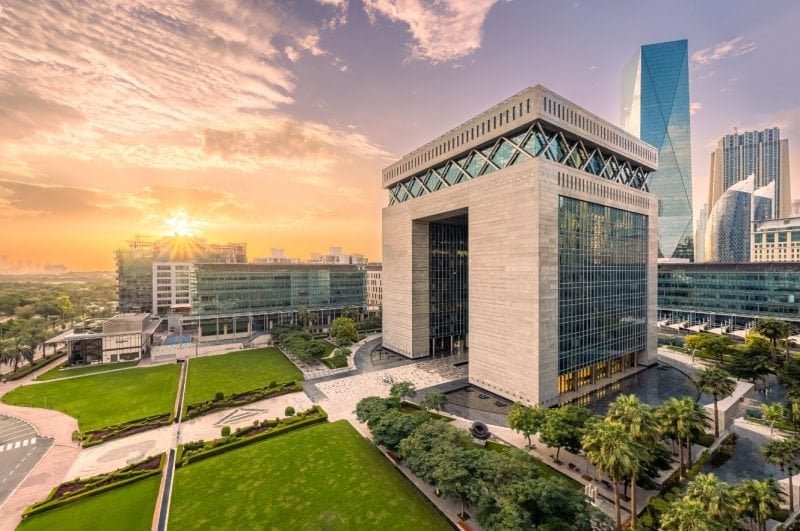
The DIFC Family Wealth Centre reflected a broader transformation in the relationship between mobile capital and financial jurisdictions.
This essay argues that the decisive competition between jurisdictions no longer concerns taxation alone. It concerns the legal, institutional and professional architecture through which wealth chooses to organise its long-term presence. The sovereign shift begins there.
I. The Portability of Wealth
For much of the twentieth century, the movement of capital was interpreted through a relatively simple geography. Companies selected locations for access to labour, markets and infrastructure. Investors compared rates of taxation, political risk and expected return. Wealth crossed borders, but the institutions responsible for governing it—banks, legal partnerships, trustees, family advisers and inheritance structures—remained comparatively anchored within a small number of established financial centres.
That arrangement has weakened. Assets can now be owned through entities incorporated in one jurisdiction, financed from another, managed from a third and invested across several continents. Families are increasingly distributed across national borders. Operating companies, residences, philanthropic interests and succession arrangements may no longer share the same legal geography. Capital has become portable in ways that the institutional systems surrounding it have not.
This difference matters because a fortune is not merely a collection of assets. It is a continuing arrangement among owners, beneficiaries, advisers, companies, obligations and future claims. Moving money may require an instruction. Moving the governance of money requires contracts to remain enforceable, ownership to remain intelligible and decision-making authority to survive changes of residence, generation and political circumstance.
Taxation remains part of that calculation. It affects the cost of residence, ownership, transfer and investment, and no serious account of capital mobility can disregard it. Yet tax advantages alone cannot explain why sophisticated family offices, international law firms, private banks and asset managers repeatedly concentrate in the same jurisdictions. Nor can they explain why families that hold assets globally often choose to coordinate them from one institutional base.
The more complex wealth becomes, the less useful it is to treat location as a price comparison. A lower rate may reduce an immediate liability while leaving unresolved the questions that determine continuity: which court will interpret the governing documents, which regulator will recognise the structure, which advisers understand its cross-border obligations, and whether the people responsible for it can remain close enough to exercise judgment when circumstances change.
Mobile capital therefore confronts a paradox. Its assets may move with increasing speed, but the confidence required to govern them still accumulates slowly. The jurisdictions that benefit most from mobility are not necessarily those that make movement cheapest. They are those that can make movement governable.
II. The Gravity of Jurisdictions
A financial jurisdiction acquires influence when its institutions begin to reinforce one another.
A credible court increases the value of contracts written under its law. Predictable regulation attracts institutions willing to commit staff and capital for longer periods. Their presence creates demand for specialist lawyers, accountants, fiduciaries and governance professionals. Those advisers make the jurisdiction more usable for the next family, fund or company considering entry. What begins as a set of separate advantages gradually becomes an environment whose value lies in the interaction among them.
This cumulative capacity may be understood as Jurisdictional Gravity: the ability of a jurisdiction to attract not only financial assets, but the legal structures, professional networks, governance mechanisms and long-term commitments through which those assets are organised.
Gravity is a more accurate metaphor than attraction because the effect does not end when capital arrives. An incentive can draw a transaction across a border. Jurisdictional Gravity draws the relationships around the transaction into a common institutional field. A holding company may be established first; a family office, foundation or managing office may follow. Advisers deepen their local capabilities. Banks develop specialised teams. Governance meetings begin to occur within the jurisdiction. Over time, the location becomes increasingly important not because every asset is held there, but because more of the decisions governing those assets originate there.
The process cannot be created by proclamation. A new law may open a possibility, but confidence depends on how consistently that law is interpreted and enforced. A regulator may offer speed, but speed has limited value if its decisions are unpredictable. A financial centre may attract prestigious firms, but prestige alone does not produce the trust required for succession, fiduciary responsibility or long-duration investment.
Jurisdictional Gravity therefore emerges from coherence. Its legal system, regulatory authorities, professional services, residency arrangements and institutional culture must operate with sufficient compatibility that the user experiences them as one environment rather than a sequence of disconnected permissions.
The development of the UAE's financial centres illustrates this construction. DIFC combines a dedicated legal and regulatory framework with structures for family offices, foundations, holding companies, wills and succession planning. Abu Dhabi Global Market complements the national ecosystem through the direct application of English common law, independent courts and vehicles including trusts, foundations and special-purpose entities. Their precise offerings differ, but together they reveal the same strategic insight: wealth becomes more durable when legal form, institutional access and professional capacity can be assembled within a recognisable operating environment.
The Family Wealth Centre represented the institutionalisation of that insight. DIFC had already accumulated banks, asset managers, legal firms and advisers. The centre did not replace them. It gave the family itself a defined point of entry into the ecosystem, turning professional density into a more deliberate proposition for multigenerational capital.
The important shift was subtle. The jurisdiction was no longer waiting for wealth to arrive and discover its institutions individually. It was curating the relationships through which wealth could establish continuity from the beginning.

III. When a Jurisdiction Becomes Infrastructure
The first visible consequence of Jurisdictional Gravity is usually an increase in registrations, offices and assets under management. The deeper consequence is a relocation of institutional capability.
A family office requires more than portfolio advice. It may coordinate operating businesses, private investments, philanthropy, succession, tax obligations, risk, education of the next generation and relationships among branches of a family living under different legal systems. Once several such structures establish themselves within the same jurisdiction, demand becomes more sophisticated. Advisers specialise. Courts encounter more complex disputes. Regulators refine their frameworks. Service providers invest in systems designed for reporting, administration and cross-border compliance.
The jurisdiction begins to learn from the capital it attracts.
That learning creates a compounding effect. The next family does not enter the same environment encountered by the first. It enters one with deeper expertise, more experienced counterparties and a broader record of institutional practice. The professional ecosystem becomes an accumulated form of knowledge, carried not only in legislation but in the judgement of the people applying it.
This is where financial geography becomes sovereign strategy. A jurisdiction that hosts assets may collect fees, employment and investment. A jurisdiction that hosts the governance of assets becomes integrated into decisions whose consequences extend far beyond its territory. Companies may operate elsewhere; properties may stand in other cities; beneficiaries may live across continents. Yet financing, succession, philanthropy and ownership may increasingly be coordinated through the legal and professional architecture of one financial centre.
The influence involved is neither ownership nor command. The jurisdiction does not control the fortune. It becomes useful to its continuity.
That usefulness can be more durable than the initial financial inflow. Transactions are episodic. Institutional relationships accumulate. A bank mandate may change, an investment may be sold and a residence reconsidered, but a governance structure connected to courts, advisers, family arrangements and succession plans carries a higher cost of displacement. The jurisdiction acquires strategic relevance by becoming embedded in the organisation of decisions rather than merely present at the execution of trades.

This does not make capital immobile. It changes the meaning of mobility. Wealth remains capable of leaving, but departure is no longer a simple transfer between accounts. It may require the reconstruction of legal relationships, fiduciary responsibilities, administrative capacity and professional trust elsewhere.
Jurisdictional Gravity thus changes the competition among financial centres. The prize is no longer only the asset booked today. It is the institutional life likely to form around that asset tomorrow.
The same principle extends beyond private wealth. International firms select headquarters partly for access to regulators, courts and talent. Investment managers cluster where investors and specialised services are already concentrated. Across each of these cases, the jurisdiction acquires influence when institutional credibility becomes sufficiently dense to organise decisions whose economic consequences extend far beyond its territory.
The sovereign shift is therefore not a movement from public power to private power. It is a change in how public authority creates economic influence. Rather than directing every allocation, the jurisdiction builds the legal and institutional conditions through which others choose to allocate, govern and remain.
Sovereignty becomes infrastructural.
IV. The Limits of Gravity
No jurisdictional advantage is permanent.
Financial history is filled with centres whose influence once appeared self-reinforcing. Their decline rarely began with the sudden disappearance of capital. It began when some part of the institutional compact became less credible: law grew uncertain, regulation lost coherence, political risk entered commercial judgment or professional ecosystems became more responsive elsewhere.
The same forces that create Jurisdictional Gravity can therefore weaken it. Institutional density may produce complacency. Rapid expansion can stretch regulatory and judicial capacity. The desire to remain agile may lead to rules that change too often for long-term structures to rely upon them. Privacy, when insufficiently distinguished from opacity, can damage the international recognition on which cross-border wealth depends. Tax advantages can be revised through domestic policy or international coordination.
Nor does gravity eliminate competition. London, Switzerland, Singapore, Hong Kong, New York and other centres retain combinations of market depth, legal credibility, expertise and historical trust that cannot be reproduced quickly. Families rarely select a jurisdiction in isolation; they construct multi-jurisdictional arrangements, distributing custody, ownership, residence and investment according to different needs. The rise of one centre does not require the disappearance of another.
The UAE's financial centres have built increasingly sophisticated frameworks. Their longer-term position will depend on whether growth is matched by consistency: whether courts remain credible, regulation remains intelligible and professional capacity matures at the same pace as the capital it serves.
Jurisdictional Gravity is not measured by how loudly a financial centre announces its arrival. It is measured by how much institutional life remains when the incentives that first attracted attention are no longer sufficient.
Conclusion — The Capital That Stays
The DIFC Family Wealth Centre began with a recognition that would have been easy to overlook.
Capital can enter a jurisdiction without becoming part of it. It can be deposited, invested and withdrawn while leaving little behind beyond a record of transactions. A family office is different. It carries governance, relationships and time.
By creating a centre devoted to the institutions surrounding wealth, the DIFC was competing for something more durable than the next allocation. It was competing to become one of the places from which capital would understand itself: where ownership could be structured, succession prepared, advice coordinated and long-term decisions given legal form.
That is the sovereign shift.
Financial jurisdictions increasingly exercise influence not by possessing the capital within them, but by building the environments on which its continuity depends. Their advantage lies neither in taxation alone nor in the temporary volume of assets they attract. It lies in the credibility of the architecture that remains available when markets change, generations turn and the original transaction has long been forgotten.
Capital can cross a border in seconds. The institutions that teach it where to remain take years to build.
— Curated Sovereignty
Author's Note
Concept Introduced
Jurisdictional Gravity — The capacity of a jurisdiction to attract not only financial assets, but also the legal structures, professional ecosystems, governance mechanisms and long-term commitments through which those assets are organised, protected and transmitted. Jurisdictional Gravity emerges when institutional components reinforce one another strongly enough that the jurisdiction becomes a centre of decision rather than merely a location of transaction.
Selected Sources
Dubai International Financial Centre
Official Launch of DIFC Family Wealth Centre 2023. · DIFC Family Wealth Centre Overview of the centre as a dedicated platform for family businesses and ultra-high-net-worth individuals. · Family Businesses Official overview of DIFC's institutional environment for family enterprises. · DIFC Private and Family Wealth Offering Consolidated official resource covering laws, regulations and structures available. · DIFC Announces Enactment of New Family Arrangements Regulations 2023 framework. · DIFC Laws and Regulations Overview of DIFC's independent legal and regulatory framework.
Abu Dhabi Global Market
Family Offices Official overview of ADGM's family-office ecosystem. · The English Common Law System Explanation of the direct application of English common law within ADGM. · ADGM Courts Official overview of ADGM's courts and independent judicial framework. · Trusts in ADGM Legal basis for trusts under English common law and the Trusts (Special Provisions) Regulations 2016.
Questions for Future Research
1. Can Jurisdictional Gravity be measured through the concentration of decision-making structures rather than capital inflows alone?
2. Which institutional components—courts, regulation, professional density, residency or market access—contribute most strongly to its formation?
3. How does Jurisdictional Gravity differ between private-wealth centres, asset-management hubs and jurisdictions serving operating companies?
4. At what point does institutional concentration create resilience, and when does it begin to produce dependency or complacency?
5. Can a jurisdiction preserve discretion for private wealth while maintaining the transparency and international recognition required for long-term credibility?
Curated Sovereignty examines strategic questions whose answers are still emerging.