Aviation · Systems · Continuity
The System No One Filmed
How an Engine Failure Revealed the Architecture Between Things
On 20 February 2021, somewhere above the suburbs north of Denver, a passenger aboard United Airlines Flight 328 turned a phone toward the window.
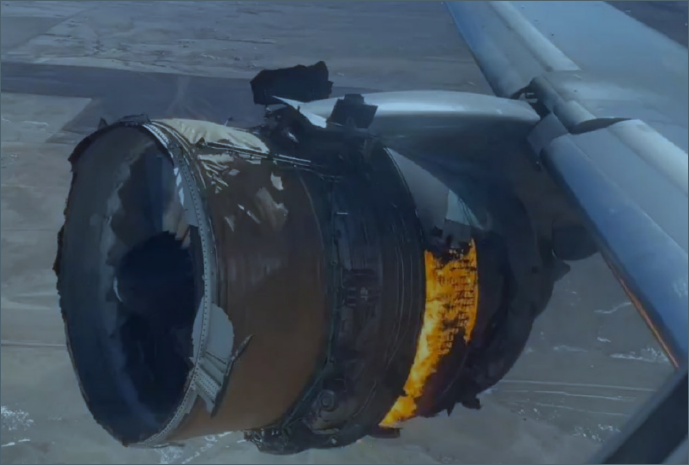
Beneath the wing of the Boeing 777, the damaged right engine had lost parts of its inlet and cowling as the aircraft, bound for Honolulu with 229 passengers and ten crew, turned back toward Denver only minutes after departure. From the cabin, the scale of the event seemed almost perfectly suited to the dimensions of the screen: an engine, a wing, the ground moving below, and the unmistakable evidence that something essential had gone wrong.
The aircraft landed safely. No one was injured.
For anyone watching the images afterwards, the drama appeared to possess a natural boundary: something had failed in the air and an aircraft had returned safely to the ground. The landing closed the visible emergency, while consequences continued to move through places the camera had never been pointed at.
I — Beyond the Frame
The failure had begun inside a single fan blade.
A fracture near the root occurred as Flight 328 climbed away from Denver. The fan case contained the fractured blade fragments as designed, although the physical sequence continued through damage to the inlet and fan cowl system, sections of which separated from the engine and fell toward the Denver area below.
For a few minutes, a failure originating within one component occupied several places at once: the damaged engine beneath the wing, the aircraft turning back toward Denver, and debris reaching the ground below. A local fracture had acquired consequences beyond the place where it began.
Inside the aircraft, another kind of movement had already begun. The crew responded through procedures and training established long before the flight; air traffic control organised the return, while Denver International Airport provided the infrastructure to receive the aircraft. None of these capacities had been assembled for Flight 328. They existed before anyone knew this particular flight would require them, converging around an emergency that had developed in minutes.
Less than half an hour separated departure from return. The capacities that made the return possible had been built, maintained and organised over periods measured on entirely different scales. The response was immediate precisely because much of its architecture was not.
On the ground, the damaged aircraft could remain still while fragments were examined and records opened. The immediate task of returning 239 people safely to Denver gave way to an inquiry moving in the opposite direction, reconstructing across years what had unfolded forward in minutes.
The fracture had acquired a past.
II — The Memory of Material
Inside the hollow fan blade, investigators found a fatigue crack that had developed from an internal radius near the root. The fracture visible in February 2021 marked the point at which the blade's earlier history could no longer remain separate from what had happened above Denver.
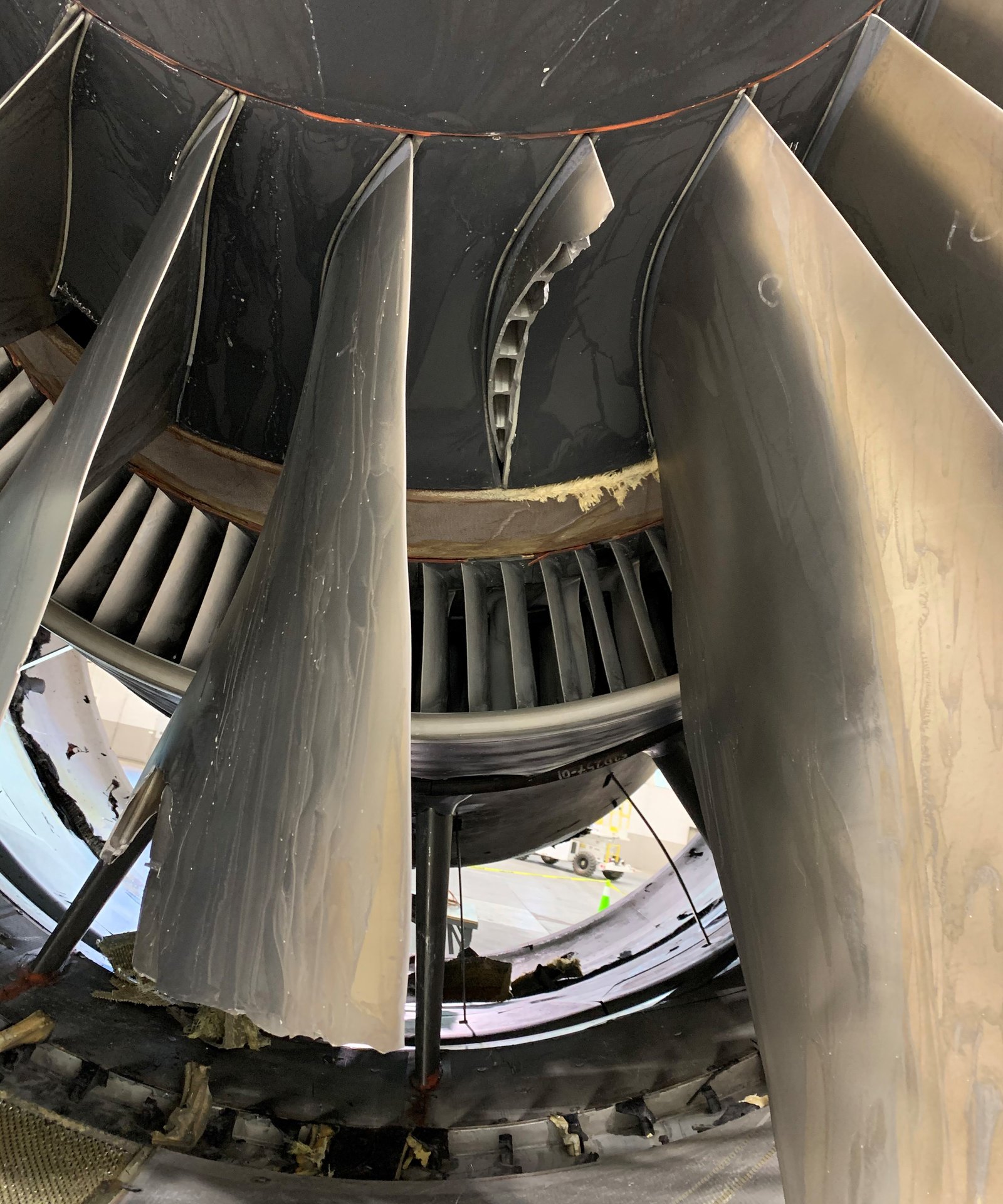
The blade had undergone thermal acoustic imaging during overhaul in 2014 and again in 2016. In the 2016 inspection data, low-level indications appeared in the area where the fatigue crack would later be found. At the time, they were interpreted as consistent with sensor noise or contamination rather than as evidence requiring the blade to be removed from service.
Another fan blade fractured on a United Airlines Boeing 777 in February 2018, prompting Pratt & Whitney to return to earlier thermal acoustic imaging records, including the 2016 data from the blade that would eventually fail on Flight 328. The low-level indications remained in the record without being identified as anomalous.
When the blade fractured in February 2021, it had accumulated 2,979 cycles since its last overhaul, during which thermal acoustic imaging had been performed, against a prescribed overhaul inspection interval of 6,500 cycles. Failure had occurred before half that interval had elapsed.
A fatigue crack can develop while associated traces remain uncertain, classified differently or preserved in records whose significance has not yet been understood. Inspection creates a point of contact between material condition and human interpretation, but a recorded signal does not arrive with its meaning already attached.
The fracture gave the earlier record a different significance. What had been preserved in 2016 could now be read against what the blade had ultimately become, bringing together a material history and a record of that history that had developed along different paths.
The past had not changed; what could be understood from it had.
Once that understanding changed, the consequences could no longer remain inside the blade.
III — The Passage of Consequence
The investigation carried the event into institutions whose responsibilities met around the same aircraft without becoming interchangeable.
The National Transportation Safety Board examined the failure and established findings. Pratt & Whitney contributed engineering knowledge of the engine and the inspection methods applied to its fan blades. United controlled the immediate operation of the airline's fleet, while the Federal Aviation Administration exercised regulatory authority over the conditions under which aircraft within its jurisdiction could operate. Different responsibilities gave each institution a different capacity to act on what the failure had revealed.
United withdrew fifty-two Pratt & Whitney PW4000-powered Boeing 777s from service. The FAA subsequently imposed inspection requirements before further flight for aircraft within the scope of its emergency action. Both decisions reached aircraft connected by engine type and technical condition to the failure over Denver, although their authority was different: United could act on the airline's fleet, while the FAA could alter regulatory conditions governing a wider population. Technical knowledge informed both forms of action without becoming identical to either.
A condition inside metal had left traces in inspection data; fracture changed the significance of those traces, technical understanding informed decisions, and decisions changed the conditions under which aircraft could operate.
Nothing material had to travel from one institution to another for the effect to continue.
The reach of the fracture was no longer measured by the distance travelled by fragments from the engine. What had been learned in Denver could alter the status of aircraft elsewhere and determine conditions that would have to be satisfied before further flight.
N772UA had returned intact enough to land safely and remained identifiable, physically present and associated with the same operator, while ordinary availability for flight had disappeared.
IV — The Conditions of Use
A parked aircraft can retain every outward sign of completeness — wings, engines, registration, physical presence — while some of the conditions that make the machine available for use reside elsewhere.
After the grounding, inspection requirements had to be satisfied, technical work performed and applicable regulatory conditions met before affected aircraft could again perform the function for which they were held. United could withdraw N772UA from operation, but restoring operational availability depended on conditions no decision by the airline alone could determine.
Grounding separated physical presence from operational availability.
Within an airline, an aircraft is also part of productive capacity and enters the financial accounts of the organisation operating the fleet. United's withdrawal of the PW4000-powered Boeing 777s removed those aircraft from ordinary operation and, in the company's financial reporting for the first quarter of 2021, became an indicator of potential impairment. Cash-flow analyses were performed to determine whether the carrying value of the relevant assets remained recoverable; no impairment resulted from those analyses.
Capital introduces another measure of continuity. A machine may cease to perform its ordinary function while recognised value, maintenance requirements, future use and its place within a fleet persist. The resulting questions are questions of duration: how long capacity can remain unavailable, what resources remain committed to preserving or restoring that capacity, and whether expected future use continues to support those commitments. Physical presence, operational absence and economic consequence can coexist in the same aircraft.
The accounting treatment preserved a distinction between immediate operational availability and recognised economic value. Grounding had removed the aircraft from ordinary use without reducing the relevant carrying value automatically to zero.
A single aircraft could therefore occupy several conditions at once: a physical machine whose engine had suffered a failure, an aircraft unavailable for ordinary commercial operation, an object subject to technical and regulatory requirements, and part of a class of assets whose recoverability had been assessed financially.
All converged upon the object visible from the passenger window, though the image itself could contain only its physical form.
V — The Architecture Between Things
The visible elements were easy to identify: an aircraft, an engine, a blade, an operator, surrounded by institutions with names, offices, records and formal powers. The relationships joining them had no equivalent physical boundary.
A change in the material condition of one component could alter the meaning of an earlier inspection record, enter an investigation, inform technical findings and lead to decisions by an operator or requirements imposed by a regulator. Those decisions could alter operational availability, while interruption of use could enter the financial assessment of the assets concerned.
No participant contained the whole. Coherence arose from the capacity of a change in one place to alter what became known, required, permitted or possible somewhere else.
A functioning system is easily mistaken for the objects through which it becomes visible. Aircraft, engines, airports and institutions possess physical form, names and boundaries; collective capacity emerges from relationships that possess none of those things. Much of modern life depends on architectures of this kind, difficult to perceive while the functions they sustain proceed without interruption. Failure can give such architecture an outline.
In Flight 328, material condition, information, engineering, operation, regulation and economic recognition remained distinct while changes passed between them, altering what other parts of the architecture could or were required to do.
During ordinary flight, these conditions converged so completely that they could appear to belong to the aircraft itself. Technical condition, crew, operational authority, infrastructure and regulatory permission aligned closely enough for a flight to depart without their relationships demanding attention.
Failure pulled them apart.
Material condition became distinguishable from interpretation, knowledge from authority, physical possession from operational availability, interruption of use from economic recognition. Relationships ordinarily concealed within the apparent simplicity of flight acquired visible consequences without beginning or ending together.
A blade fractured in seconds; the consequences continued for months. Records created years earlier acquired new significance after the aircraft had landed, while technical, regulatory and operational work continued beyond the end of the emergency.
The architecture extended across time as surely as across institutions.
VI — The Continuity of Interruption
N772UA remained outside commercial service for approximately eighteen months.
Measured through flight alone, the interval can appear almost empty: operation ceased and eventually resumed, leaving between those states a long period without the machine's most visible function. Technical work, maintenance, operational decisions and regulatory conditions nevertheless continued to shape what could happen next.
Their clocks differed from the emergency over Denver. Physical failure unfolded in seconds and the return to the airport in minutes; understanding the fracture reached backward across years of inspection history, while the conditions surrounding a possible return to service developed forward over months.
No single institution carried N772UA intact through that interval, and no single process preserved a continuous state of readiness. Continuity resided in relationships capable of changing the aircraft's condition throughout a period in which commercial operation had ceased.
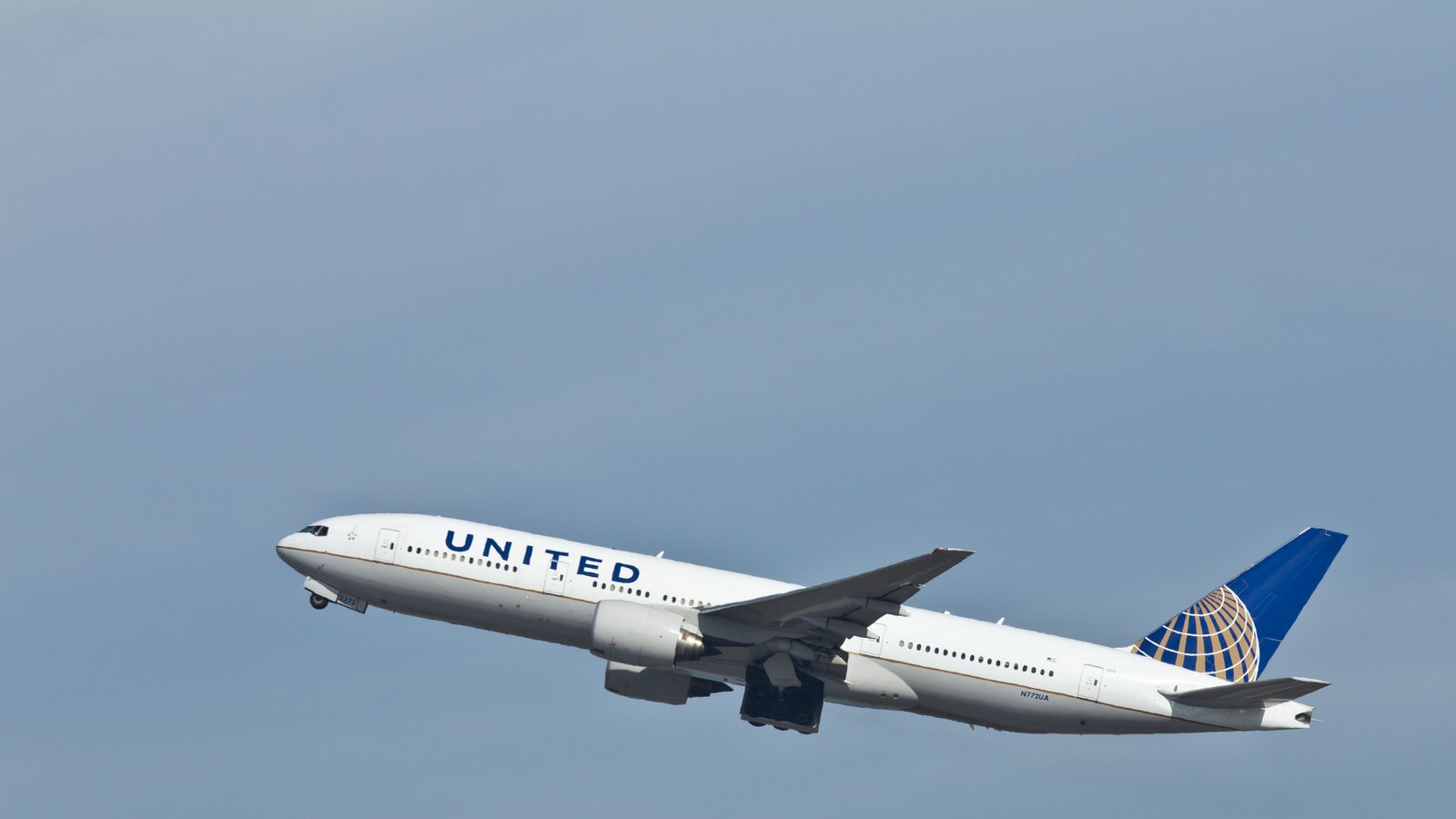
In August 2022, after approximately eighteen months outside commercial service, N772UA returned to commercial operation under conditions different from those that had existed before the failure. Work had been performed, requirements addressed, and the aircraft could again perform the function by which passengers ordinarily understood it.
Flight became possible again.
The return inverted part of the original sequence. In February 2021, a physical change inside one blade had propagated outward until an aircraft capable of flight became unavailable. In August 2022, conditions distributed beyond the physical aircraft had converged sufficiently for operational availability to return.
The aircraft flew again through relationships that remained largely where they had always been: outside the passenger's field of view.
Conclusion — The Frame and Beyond
The phone raised toward the window on 20 February 2021 had recorded a damaged engine beneath the wing of an aircraft still in the air, against the landscape below.
The image was accurate, but a camera capable of recording objects, damage and movement could not gather into the same frame the relationships through which material condition becomes evidence, evidence acquires consequence, authority changes conditions of use, and interrupted function becomes possible again.
Those relationships preceded the moment the passenger pressed record, continued after the aircraft landed, and remained present when N772UA returned to the sky eighteen months later.
The frame was accurate because the camera had recorded what could be seen. What lay beyond it was not another image waiting to be captured, but the architecture that made the image incomplete.
— Curated Sovereignty
Author's Note
Selected Sources
National Transportation Safety Board
Aviation Investigation Final Report: United Airlines Flight 328 — Primary investigation record establishing the accident sequence, fan-blade fatigue failure, engine damage, inspection history, crew response, technical findings and probable cause.
National Transportation Safety Board
DCA21FA085 Public Docket — Underlying investigative record containing the technical, maintenance, materials, airworthiness and other factual documentation supporting the final investigation.
Federal Aviation Administration
Emergency Airworthiness Directive 2021-05-51 — Documents the immediate regulatory response following Flight 328, including required thermal acoustic imaging inspections of affected Pratt & Whitney PW4000 fan blades before further flight.
Federal Aviation Administration
Subsequent PW4000 Airworthiness Actions — Regulatory material documenting the inspection, modification and return-to-service conditions subsequently established for the affected Boeing 777 and PW4000 fleet.
United Airlines Holdings
Form 10-Q, Quarter Ended 31 March 2021 — Records the temporary removal of 52 Pratt & Whitney PW4000-powered Boeing 777-200 and 777-200ER aircraft from scheduled service and United's assessment of the resulting potential impairment indicator.
United Airlines Holdings
Form 10-K, Year Ended 31 December 2021 — Provides the broader corporate and accounting context for fleet assets, recoverability and the treatment of aircraft within United's operating structure.
N772UA
Aviation Wire — United Airlines Returns N772UA to Commercial Service, August 2022 —Contemporary reporting documenting the return of the Flight 328 aircraft to commercial operation on 21 August 2022, approximately eighteen months after the event. .
Related Concepts
Material Memory — The persistence of physical evidence within a material structure after the conditions that produced it have passed.
Distributed Authority — The allocation of consequential decisions across distinct technical, operational and regulatory actors rather than within a single centre of control.
Operational Availability — The condition in which an asset is not merely present or technically capable, but permitted and prepared to perform its intended function.
System Continuity — The capacity of a system to preserve, suspend and eventually restore its function through coordinated relationships that persist across interruption.
Questions for Future Research
What happens to capital when the function it supports stops? Operational interruption does not necessarily eliminate the economic significance of an asset. Further research could examine how duration, expected restoration, maintenance obligations and future productive use alter the treatment of capital while ordinary function remains unavailable.
How should system continuity be measured when visible output has stopped? Conventional measures often register operation or failure. They reveal less about the relationships, capabilities and institutional processes that remain active during interruption and make restoration possible.
How does distributed authority affect the speed and quality of restoration after interruption? Complex systems often separate technical knowledge, operational control and regulatory authority. Further research could examine when that distribution strengthens restoration and when the movement of information between institutions becomes a source of delay.
Curated Sovereignty examines strategic questions whose answers are still emerging.