Aviation · Regulation · Recognition
The Unseen Permission
Why Technical Capability Is Not Enough
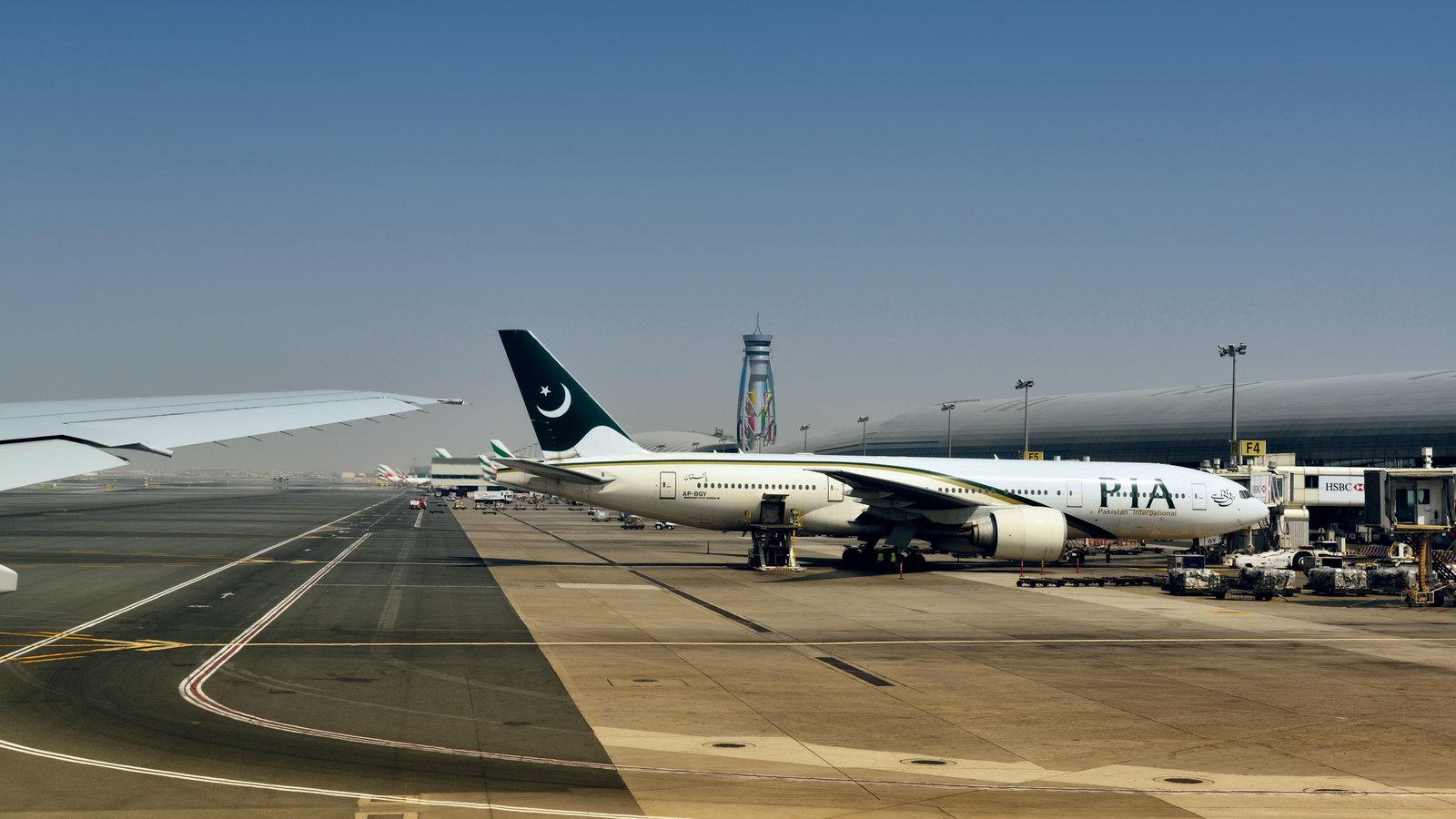
In the summer of 2020, Pakistan International Airlines still possessed aircraft, crews and routes to Europe.
Its aircraft remained airworthy. Its pilots continued to fly. The destinations had not moved.
Yet the airline could no longer operate within the European Union.
No runway had closed. No airspace had disappeared. The permission had been withdrawn.
For passengers, the interruption appeared sudden. For regulators, it reflected something built long before the flight itself.
I. Permission Precedes Movement
A commercial international flight depends on a chain of authorisations that must be in place before the aircraft ever leaves the ground.
The aircraft must hold a certificate of airworthiness. Its design must be covered by a type certificate. The operator must possess an Air Operator Certificate issued by its national aviation authority. Crew members must hold valid licences. Maintenance must be performed by approved organisations. The national authority must demonstrate effective safety oversight. The destination state must recognise the entire architecture as credible.
None of these conditions is visible to the passenger. The boarding pass confirms a seat. It does not confirm that the regulatory chain behind the flight remains intact.
The European Union Aviation Safety Agency centralises a single safety authorisation for third-country operators seeking to fly to the territories of its member states. A Third Country Operator authorisation does not replace traffic rights, but it constitutes a prerequisite for their exercise. Without it, an airline may still possess aircraft, crews and bilateral route permissions. It cannot legally operate commercial services within the European system.
The flight begins institutionally before it begins physically.

II. Recognition Is the Real Border
A certificate issued in one country does not automatically produce rights in another.
It must be recognised. It must be validated. It must be accepted as evidence that the holder meets the standards of the receiving jurisdiction. And it must continue to be trusted over time.
Pakistan International Airlines did not lose access to Europe because all its aircraft had suddenly become incapable of flight. It lost access because the European regulator determined that the Pakistan Civil Aviation Authority could no longer provide sufficient assurance of effective safety oversight.
The concern was not confined to a single aircraft or crew. It extended to the institutional capacity of the state responsible for supervising the system behind them.
The TCO framework transforms a regulatory assessment into access or non-access across thirty-one EASA member states. A single institutional decision can therefore determine whether an airline may enter a market of continental scale.
The aircraft, the pilots and the routes had not changed. What had changed was the judgment behind them.
Recognition had been withdrawn. Access disappeared with it.
III. Standards Are Infrastructure
The standards governing international aviation are developed through the International Civil Aviation Organization. ICAO establishes Standards and Recommended Practices that provide the basis for harmonised aviation between jurisdictions. Their purpose is to enable safe, orderly and efficient air transport across different legal systems.
Their implementation, however, remains the responsibility of each contracting state.
This is where the architecture becomes visible.
ICAO establishes the international framework. States incorporate it into domestic law, regulation and supervision. Regional or foreign authorities then assess the credibility of that implementation. Operators receive or lose access according to the result.
Standards do not merely describe the system. They create the conditions under which separate jurisdictions can trust one another enough to connect.
When that trust is intact, a certificate issued in Karachi may be accepted in Frankfurt. When it is damaged, the same certificate becomes insufficient. The underlying standard may remain unchanged. The recognition that gives it operational force does not.
This distinction is fundamental.
Standards may be written as universal requirements, but their effects depend on the capacity of institutions and operators to implement them—and on the willingness of other jurisdictions to accept that implementation as credible.
Aviation therefore depends on more than technical compatibility. It depends on institutional confidence between systems.

IV. The Unequal Cost of Permission
The requirements for entry into the European aviation system are formally identical for all applicants. A maintenance organisation in Karachi and another in Frankfurt must satisfy the applicable regulatory standard. Documentation, audits, technical competence and quality systems are assessed against defined criteria.
The resources required to demonstrate compliance are not equally available.
A well-resourced operator within a mature regulatory environment may absorb the cost of certification without threatening its commercial viability. A smaller operator in a jurisdiction where the national authority lacks inspectors, technical expertise or administrative continuity faces a different equation.
The standard is equal. The starting position is not.
The same dynamic operates across the wider system.
A manufacturer seeking type certification for a new aircraft must sustain years of engineering, testing and documentation. A national authority seeking to maintain its standing under ICAO's Universal Safety Oversight Audit Programme must invest in inspectors, training, data systems and institutional continuity.
The requirements are universal. The capacity to meet them is distributed unevenly.
Formal equality at the threshold does not produce equal capacity to cross it.
This does not make the standards illegitimate. It makes their effects asymmetric.
A system designed to protect safety also structures access. The distinction between a technical requirement and a barrier to entry does not lie solely in the wording of the rule. It also lies in the distribution of the resources required to satisfy it.
V. Normative Access
The capacity to enter a regulated system is not determined by physical capability alone.
It depends on the ability to obtain, maintain and periodically renew the institutional recognition that a product, operator or authority meets the required standard.
This is normative access: the capacity of an actor, product or system to enter a wider operational environment through recognised compliance with its governing rules.
Normative access does not depend only on whether an aircraft can fly. It depends on whether the institutions certifying and supervising it are trusted by the institutions controlling the system it seeks to enter.
The European Union does not need to own foreign airlines to influence their behaviour. It exercises influence by determining the conditions under which they may enter its operational space.
The rule becomes a border.
It protects safety. It also allocates access.
The authority that defines acceptable participation does not merely govern the system. It shapes the perimeter of the system itself.
This power is not necessarily arbitrary. It can protect passengers, harmonise practices and make complex systems compatible across jurisdictions. Its strength comes from the fact that legitimacy and control are produced by the same structure.
The standard that protects passengers is also the standard that determines who may carry them.
Conclusion
In November 2024, more than four years after its authorisation was suspended, Pakistan International Airlines recovered access to the European system.
The aircraft had not been redesigned. Europe had not moved closer. The route had not been rebuilt.
What had changed was the institutional judgment behind the route.
The Pakistan Civil Aviation Authority had taken steps to restore the credibility of its oversight. EASA assessed those steps and determined that recognition could be restored. The TCO authorisation was reissued. Flights could resume.
Recognition had returned.
Aviation makes this architecture unusually visible because its consequences are immediate. An aircraft may possess the range, crew and runway required for flight and remain unable to enter the system beyond them.
Physical capability and institutional permission are separate conditions. Both must be satisfied before movement becomes possible.
Permission does not surround movement.
It precedes it.
The flight begins long before the aircraft leaves the ground.
— Curated Sovereignty
Selected Sources
European Union Aviation Safety Agency
Third Country Operators (TCO). · EASA Part-145: Maintenance Organisation Approvals.
European Commission
Commission Implementing Regulation (EU) No 452/2014.
International Civil Aviation Organization
Standards and Recommended Practices. · Universal Safety Oversight Audit Programme.
European Commission, Mobility and Transport
EU Air Safety List.
Author's Note
Concepts Introduced
Normative Access — The capacity of an actor, product or system to enter a wider operational environment through recognised compliance with its governing standards. Normative access does not depend on physical capability alone. It depends on institutional recognition that the capability meets the required standard—and that the authority certifying it can be trusted.
Questions for Future Research
1. Can normative access be measured? — What indicators would capture the capacity of an operator, product or jurisdiction to obtain and maintain recognition within a regulated system?
2. How does the distribution of normative access shape competition in regulated industries? — Do jurisdictions with mature regulatory infrastructures enjoy structural advantages beyond the quality of their operators?
3. Under what conditions does normative access become a barrier to entry rather than a legitimate safety requirement? — Is there a threshold beyond which the cost of compliance excludes otherwise capable participants?
4. How does normative access interact with other forms of market access, including traffic rights, ownership restrictions and competition policy?
5. Can mutual-recognition agreements reduce asymmetries in normative access without compromising safety outcomes?
Curated Sovereignty examines strategic questions whose answers are still emerging.